How to Quote Medium Voltage Cable: A Distributor's Playbook
Written By: Craig Keller
Posted February 6, 2026

Why Medium Voltage Quotes Are Different
Your typical wire quote follows a familiar rhythm. A customer calls with a spec, you check inventory, price it, and send the quote. Ten minutes, done. You win or lose on price and availability.
Medium voltage cable breaks this pattern entirely because your customers are buying risk management, not just material. That 15kV cable for a data center feed represents confidence the cable will perform for twenty years, pass testing on the first attempt, and arrive exactly when construction schedules demand it. This fundamental shift from commodity transaction to risk transfer changes everything about how you should approach the quote.
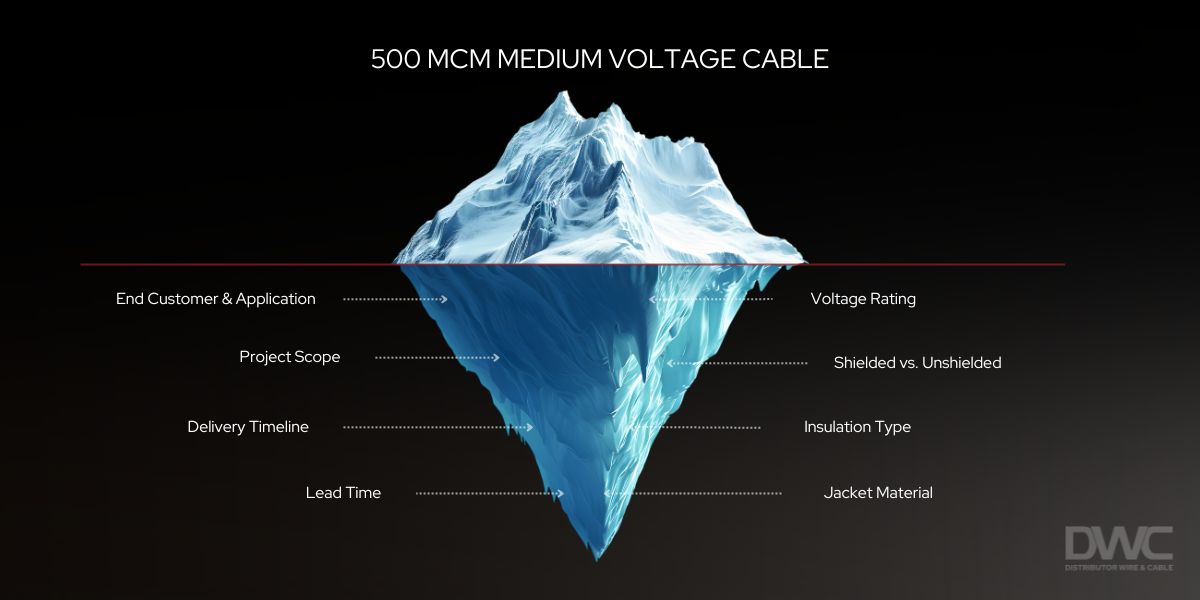
Specification complexity creates your opportunity. A customer requesting "500 MCM THHN" has described the product completely. Someone requesting "500 MCM medium voltage cable" has left dozens of critical decisions undefined. What's the voltage rating? The insulation type? The shield configuration? The jacket material? Smart distributors recognize this ambiguity as a consulting opportunity rather than a simple pricing exercise.
Lead times compound these differences dramatically. Custom MV specifications might require 60 weeks from manufacturers while stock product delivers in days. This timeline gap creates strategic decisions that determine your profitability. Should you quote from stock at higher margins, or from manufacturers at lower margins but extended lead times? Your answer determines whether medium voltage becomes a profit center or just ties up working capital while generating modest returns.
The truth that separates successful MV distributors from struggling ones is simple. Medium voltage quoting is a business intelligence discipline that happens to involve cable specifications, not a cable specification process that happens to involve business considerations. Master the business intelligence, and the technical aspects become straightforward execution.
The Six Questions That Determine MV-105 Quote Success
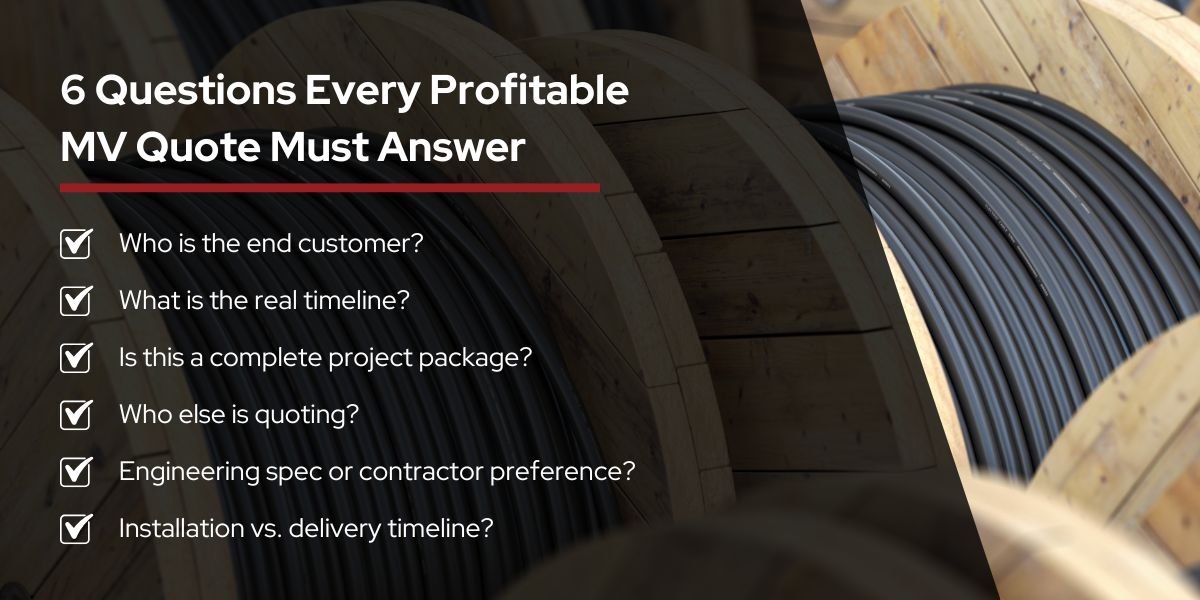
Before you calculate a single price or confirm a single specification, six qualifying questions determine whether a medium voltage quote will generate profitable business or expensive problems. These aren't technical questions about voltage ratings or conductor sizes. Those come later. These are business intelligence questions that reveal what you're really quoting and whether you should invest effort in winning it.
Question One: Who's the End Customer and What's the Application?
The answer to this question reveals everything about payment terms, margin opportunity, and technical support requirements you'll face after winning the business.
A utility contractor buying for substation work operates completely differently than a commercial electrician buying for a shopping mall transformer feed. The utility contractor specifies exactly what they need, expects competitive pricing, pays on standard terms, and rarely calls with installation questions. The commercial electrician might need specification guidance, will pay for that expertise, might need extended payment terms, and will definitely call asking about termination requirements.
Your quote structure should reflect these differences from the first conversation, not after you've won business you shouldn't have pursued at the price you quoted. DWC sees distributors make this mistake constantly. They quote utility pricing for commercial work, then wonder why the margin evaporates when they're spending hours providing technical support they never budgeted for.
Question Two: What's the Delivery Timeline and Is It Flexible?
This question separates real opportunities from fantasy projects where your chances of profitable success approach zero.
A customer needing 2,000 feet of custom specification 25kV cable delivered in three weeks is describing an impossible scenario unless they're willing to pay premium freight and accept substitute specifications. A customer needing the same cable in ten weeks gives you time to source properly and manage costs effectively.
Most distributors ask "when do you need it?" and accept whatever answer they receive as gospel. Smart distributors probe for the real timeline, understand what's driving it, and identify whether flexibility exists. Sometimes the customer says three weeks but really means six weeks, and your competitor who quotes three weeks at break-even pricing will miss delivery while you deliver profitably on the real timeline.
This is where DWC's stock position creates immediate value. When you can deliver 15kV cable tomorrow versus three weeks from a competitor, you've eliminated your customer's time risk entirely. That advantage is worth real money in construction schedules.
Question Three: Is This Complete Material or Part of a Larger Package?
Single quotes for single projects generate transactional business at commodity margins. Quotes that represent entry into larger relationships or ongoing supply arrangements deserve different pricing strategies and more extensive qualification effort.
When a data center contractor asks for quotes on 1,500 feet of 15kV EPR cable, the question reveals whether this is their complete project requirement or whether they're also buying 4,000 feet of 600V cable, cable tray, termination kits, and testing services. If you're only seeing the MV cable quote, you're probably competing against distributors who are bundling complete packages. If you could quote the complete package, your MV cable pricing might be more aggressive because you're earning margin across multiple categories.
The package approach transforms how you think about medium voltage margins entirely. You might quote the high-visibility MV cable at 15% to win the project, then capture 25% margins on the 600V cable and accessories where customers pay less attention to pricing.
Question Four: Who Else Is Quoting This Project?
Most distributors avoid asking this question because they think it sounds weak or customers won't answer honestly. Experienced distributors ask directly because the answer provides critical competitive intelligence that drives pricing strategy.
If you're competing against three other local distributors, price will largely determine the winner and margins should be modest. If you're competing against going manufacturer-direct or national supply agreements, you might win on delivery speed and service at higher margins. If you're the only quote because the customer found you through technical resources and reputation, you have pricing power others don't.
The competitive landscape determines your strategy completely. You can't develop strategy without understanding the landscape.
Question Five: What's Driving the Specification: Engineering Requirements or Contractor Preference?
Engineer-specified projects offer limited flexibility. If the spec calls for 15kV EPR with copper tape shield and you don't stock that exact configuration, you're probably not winning without lengthy approval processes that kill construction schedules.
Contractor-preference projects offer enormous flexibility because contractors care about performance and price, not specific construction details. If you can demonstrate that your stocked 15kV XLPE with wire shield meets their application requirements and saves them two weeks of lead time, they'll often prefer the substitute enthusiastically.
Knowing which situation you're quoting determines whether you should strictly quote the specification or propose alternatives that benefit both parties. This is where DWC's technical team becomes invaluable. When you're uncertain whether a substitution makes sense, our applications engineers can confirm performance equivalency in minutes rather than days.
Question Six: What's the Installation Timeline Versus Material Delivery Requirement?
This question reveals cash flow implications and storage considerations that affect whether you want the business at your quoted price.
A contractor who needs cable delivered immediately but won't install for three months is asking you to finance their inventory. A contractor who needs delivery in six weeks for immediate installation matches your normal business patterns. A contractor who needs cable delivered to multiple job site locations over several months is describing a logistics operation that costs money beyond the cable price.
Your quote should reflect these realities through delivery terms, storage fees, or adjusted pricing that compensates for the additional complexity you're absorbing. DWC's same-day shipping capability eliminates much of this complexity when you're working from our stock, but custom orders require explicit handling of these timeline mismatches.
These six questions take maybe five minutes to ask, but they determine whether you're quoting profitably or setting yourself up for expensive problems. The sophisticated distributors who dominate medium voltage business ask these questions systematically for every opportunity, not because they're being difficult but because they've learned that quotes without business intelligence lose money even when they win business.
Technical Matching That Matters
Once you've qualified the opportunity properly, technical specification follows logical patterns that protect both you and your customer.
Voltage Rating: Never compromise here. A 12.47kV system uses 15kV cable for 20% safety margin against transients and lightning. Never suggest lower ratings to save money. The liability from failure dwarfs any margin you might save, and you'll lose the customer relationship permanently when their installation fails inspection.
Ampacity: Published tables show standard conditions with 90°C conductor temperature and 20°C ambient temperature. Real installations rarely match these assumptions. Underground cables in hot climates, grouped conduit runs, cables installed near heat sources all need derating. Recognize when specifications seem undersized. A 250 MCM cable rated for 400 amps needs explanation about installation conditions. If the numbers don't make sense, ask questions before quoting.
Insulation Type: EPR costs more but offers superior flexibility and cold-weather performance. Data centers and hospitals specify it for reliability. Industrial facilities often accept XLPE for cost savings. Quote what's specified unless you have the relationship depth justifying substitution suggestions. DWC stocks both EPR and XLPE configurations specifically so you can match customer specifications from inventory rather than forcing substitutions that create approval delays.
Shield Configuration: Copper tape provides better electrical performance at lower cost. It's the default choice for most applications. Wire shield offers mechanical strength for pulling stress applications but costs more. Substitution requires understanding application needs, and this is another area where quick consultation with DWC's technical team prevents expensive mistakes.
Jacket Material: PVC for indoor applications, CPE is also an option for outdoor and direct burial. PVC is the standard for most applications, but ensure it carries a 'Sunlight Resistant' listing for outdoor use. For extreme cold or chemical environments, you should encourage an upgrade to CPE.
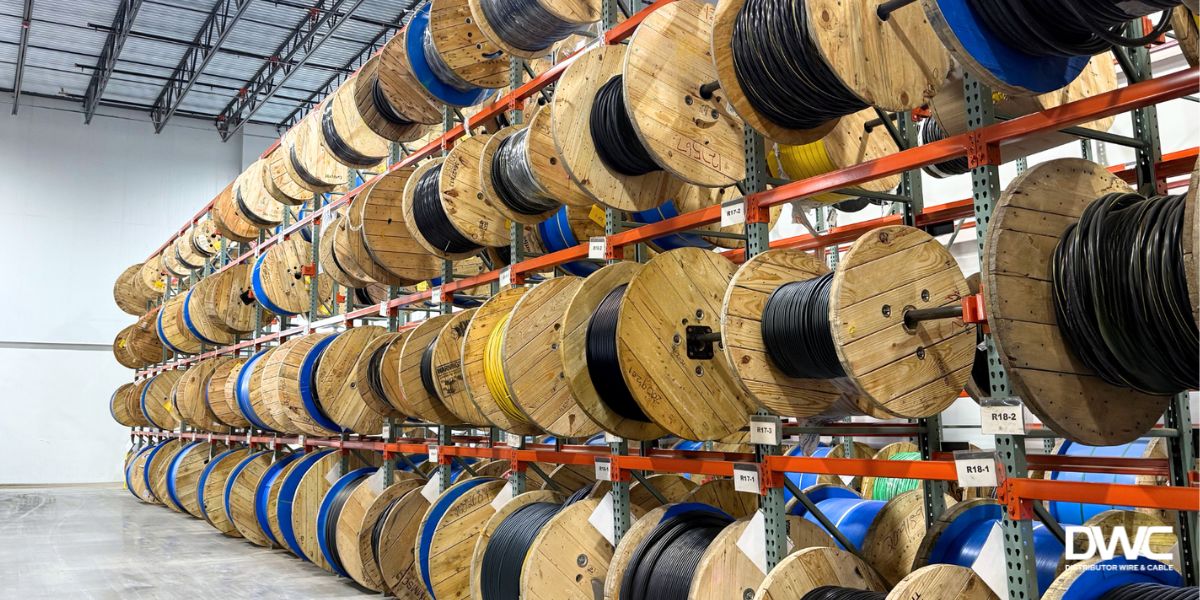
DWC's inventory spans voltage ratings from 5kV through 35kV, conductor sizes from 2 AWG through 1000 MCM, both EPR and XLPE insulations, and all standard shield configurations. Tapping into this depth means you can deliver from stock in days versus weeks, creating value that contractors remember when the next project starts.
Margin Optimization in Medium Voltage Quoting
Medium voltage cable margins range from commodity levels around 8% to 10% when you're competing purely on price to specialty rates of 25% to 30% when you're delivering unique value customers can't get elsewhere. Understanding what drives these margins and how to position yourself toward the higher end determines whether medium voltage generates real profit or just revenue that barely covers costs.
Stock Position Creates Immediate Margin Opportunity: When you can deliver 15kV cable tomorrow versus three weeks from a competitor, you've created several thousand dollars of value to customers operating on construction schedules. This value justifies pricing at the high end of market ranges because you're preventing schedule delays, avoiding change order complications, and enabling contractors to meet critical milestones.
Quote stock material at premium margins, typically 20% to 25% for standard configurations, and don't apologize for the pricing. You've invested capital maintaining inventory that competitors don't stock, and customers should pay for that strategic advantage. This is the core of how master distributors like DWC create value. We hold the inventory so you can offer your customers delivery speed that manufacturers can't match.
Emergency Delivery Creates Even Stronger Pricing Power: Use it judiciously to maintain customer relationships. When a contractor calls desperately needing cable by tomorrow morning for a project that stops without it, you can command premium pricing. Sometimes emergency situations support 35% to 40% margins plus delivery charges.
DWC's experience suggests quoting fair emergency premiums around 25% to 30%, delivering reliably, and building relationships where contractors call you first for normal-timeline projects because they remember your responsiveness when they really needed it. Our 24/7 availability for storm recovery and grid outages exists specifically to support this relationship-building approach.
Custom Configurations Generally Support Lower Margins: When customers need 25kV cable with special jacket compounds or non-standard conductor sizes, you're probably quoting in the 12% to 15% margin range to win against competitors with established supply chains for these products. Accept that these quotes serve relationship-building purposes more than profit generation, but don't lose money chasing business you're not equipped to serve profitably.
If your margin drops below 10% on custom products, you're probably competing against better-positioned suppliers and should evaluate whether winning makes strategic sense.
Project Bundling Creates Margin Optimization Across Product Categories: That data center contractor buying 2,000 feet of 15kV cable also needs 600V cable, cable tray, support systems, and various accessories. Quote the medium voltage cable at modest margins to win the project, then capture stronger margins on the 600V cable and accessories where you face less competition and customers pay less attention to pricing.
Your total project margin might reach 22% even though the MV cable sits at 15%, and you've won business based on competitive pricing in the category customers watch most carefully.
Volume Commitments Enable Margin Reduction When They Create Strategic Advantage: Don't give volume pricing for vague promises of future business that might never materialize. The margin reduction should be offset by guaranteed volume that improves inventory turns and planning certainty.
Common Margin Killers to Avoid when Quoting Medium Voltage Cable
Watch for margin killers that destroy profitability unless you account for them explicitly. Multiple delivery locations, staged delivery timing, customer will-call pickups spread over weeks, and extensive technical support calls all consume costs that don't appear in cable pricing.
Either charge separately for these services or build them into your pricing through adjusted margins. The customers who generate lowest margins often consume highest support costs, and this combination guarantees unprofitable business unless you price defensively from the start.
This is another area where DWC's operating model creates competitive advantage. We don't charge cut fees or reel charges that manufacturers typically impose. These hidden costs often surprise distributors who quote manufacturer-direct pricing, then discover they're losing money on the logistics. When you're working with DWC inventory, you know your true costs upfront.
An MV-105 Quote Structure That Converts
Professional quote format matters as much as pricing accuracy. Two distributors offering identical products at identical prices get different win rates because one builds confidence while the other creates confusion.
Project Identification: Open with customer name, project name, quote date and number. Restate specifications you're quoting clearly. "15kV EPR insulated cable, copper tape shield, 500 MCM, PVC jacket." This confirms understanding, creates written record, and prevents confusion when customers juggle multiple suppliers.
Transparent Pricing: Line item cable price per foot, show quantity, calculate extended price. Then show delivery charges separately, cutting fees if relevant, and other costs. Note items dependent on final details as "TBD based on final delivery requirements." Never surprise customers with charges they didn't see in the original quote.
Delivery Timeline: State explicitly whether you're quoting stock or manufactured product. "Available from stock, delivery within 48 hours" tells a completely different story than "Manufacturing lead time 8 to 10 weeks plus transit." Contractors make commitments based on your promises. Vague timelines create problems that destroy relationships.
Technical Specifications: Include voltage rating, insulation type, temperature rating, applicable standards like UL or ICEA, and basic construction details. This helps customers compare quotes properly and demonstrates your competence. It also provides documentation if questions arise months later about what was quoted versus what was delivered.
Product Data: Attach specification sheets when possible. Customers gain confidence reviewing construction details without calling back for information. DWC provides detailed specification sheets for all stocked products that you can include with quotes generated through fastQuote.
Validity Period: Quote valid 30 days protects against copper price volatility. Large projects with extended decisions need shorter periods or price adjustment language. Be explicit about this. Copper prices can swing dramatically, and your quote should protect you against extended decision processes.
The difference between amateur and professional presentation appears in these details. DWC's fastQuote system generates quotes in approximately six minutes for standard configurations, giving you speed advantage while maintaining professional presentation. The system automatically includes technical specifications, delivery timelines, and product data sheets, eliminating the manual assembly work that slows down quote turnaround.
Building Quote Intelligence That Compounds
Every medium voltage quote teaches you something about your market that makes future quotes better. The distributors who systematically capture this intelligence build market expertise competitors can't match.
Document every quote with information beyond what goes to customers. Record the six qualifying questions so you can review patterns. Track which data center contractors consistently specify EPR versus XLPE. Note which utility contractors always use tape shield versus wire shield. This intelligence accumulates into market knowledge that speeds future quotes and improves win rates.
Track win rates by customer type and competitive situation. If you win 60% when bidding alone but 20% against three competitors, that insight drives strategy about which opportunities deserve maximum effort. Maybe you're pricing too aggressively in sole-source situations or not aggressively enough in competitive bids.
Develop specification templates for common applications. After quoting several data center projects, create templates that reduce quoting time from hours to minutes while eliminating specification errors. These templates encode your accumulated knowledge about what works in specific applications.
Build competitive intelligence files noting who quoted against you, pricing ranges you encountered, lead times competitors offered, and win or loss outcomes. This competitive landscape intelligence becomes increasingly valuable as it accumulates. You start recognizing patterns about which competitors can deliver what they promise versus which competitors consistently miss schedules.
Create feedback loops where field experience influences future quotes. When your customer's contractor calls about installation problems, document what happened. When technical questions arise during projects, record both the questions and answers. This field intelligence prevents you from repeating problems and helps you anticipate customer needs before they ask.
The compounding effect creates sustainable competitive advantage. Competitors can match your pricing or stock similar inventory, but they can't quickly recreate years of accumulated market knowledge. Every quote makes you smarter about your market, and that intelligence gap grows into market leadership over time.
The Path Forward
Medium voltage quoting separates sophisticated distributors from order-takers. The sophisticated approach combines business intelligence through systematic qualifying questions, technical matching that balances precision with practical flexibility, strategic margin optimization based on value delivered rather than simple cost-plus markup, professional quote presentation that builds confidence, and systematic intelligence capture that compounds advantage over time.
The barrier to entry isn't technical knowledge or product access. DWC provides the inventory depth and technical support that lets any distributor compete in medium voltage cable. The barrier is business discipline. The discipline to qualify properly, price strategically, present professionally, and learn systematically.
Most distributors skip these steps because they're reacting to immediate quotation requests rather than building long-term market position. They quote everything that comes across their desk, price based on whatever markup they use for commodity wire, send informal quotes via email, and never review what worked versus what didn't. Then they wonder why their medium voltage business generates revenue without profit.
You can implement a better approach immediately. Take the six qualifying questions and train your team to ask them systematically before pricing anything. Review your quote template and improve it using the structure elements discussed here. Start documenting quote intelligence in whatever system you have available. Even a simple spreadsheet captures more intelligence than nothing. These changes cost nothing but attention, yet they'll improve your medium voltage win rates and margins measurably within weeks.
The market opportunity keeps growing as electrification drives medium voltage adoption beyond traditional utility applications. Data centers, battery storage facilities, electric vehicle charging infrastructure, and renewable energy installations all require medium voltage cable. Many involve contractors who aren't traditional MV buyers. They need distributors who understand both the technical requirements and the business dynamics.
Your quote process determines whether you capture this growth at attractive margins or compete unsuccessfully against distributors who understand that medium voltage is fundamentally a business intelligence discipline where technical specifications are the entry fee, not the differentiator.
DWC stocks the medium voltage configurations your market needs and delivers quotes through fastQuote in approximately six minutes for standard products. We eliminate the cut charges and reel charges that erode your margins. We provide same-day shipping that creates competitive advantage your customers will pay for. We offer 24/7 emergency response that builds the relationships driving long-term profitable business.
The distributors who master the business intelligence side of medium voltage quoting while leveraging DWC's inventory and logistics capabilities dominate their markets. The ones who don't keep wondering why they can't make money selling premium products. The difference between these outcomes isn't technical knowledge. It's business discipline applied consistently to every quote opportunity.