What Is Tray Cable? A Complete Guide for Electrical Distributors
Written By: Craig Keller
Posted February 12, 2026

Not all cables are created equal, and few offer the versatility of tray cable.
Tray cable (often abbreviated as TC) is one of the most widely used cable types in industrial and commercial environments, and for good reason. It's durable, adaptable, and engineered to meet the needs of modern control, power, and instrumentation systems. But with its flexibility comes complexity. Tray cable comes in many forms: shielded, unshielded, armored, unarmored, with different insulation types, ratings, and approvals. Knowing which tray cable to recommend, and when, is essential for any distributor who wants to build trust and avoid costly missteps.
In this guide, we'll break down:
What tray cable is and how it's constructed
The difference between TC and TC-ER
Where tray cable is commonly used
Which codes and standards govern Tray Cable installation
Why proper spec knowledge isn't optional because it's your credibility on the line!
By the end, you'll have the foundational knowledge needed to confidently support your customers, reduce return risk, and position yourself as a go-to resource for tray cable selection and strategy.
What Is Tray Cable (TC)?
At its core, tray cable is a factory-assembled, insulated multi-conductor cable designed to carry power, control, or signal within industrial and commercial facilities. What makes it unique isn't just what it's made of but where it's allowed to go.
Tray cable is approved for use in:
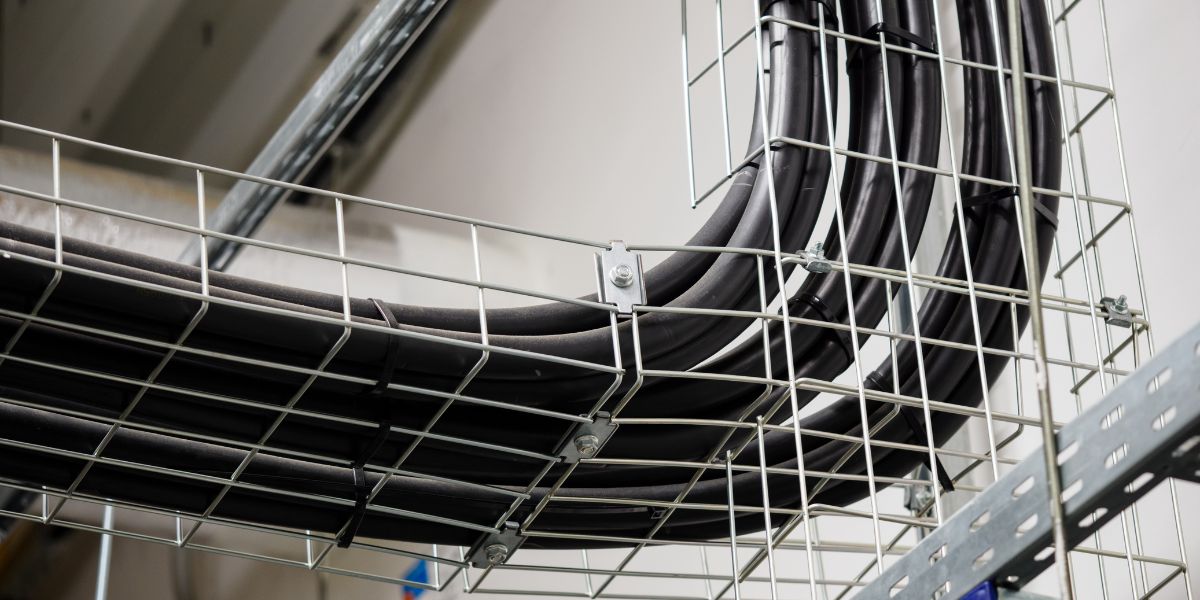
Cable trays
Conduit and raceways
Certain exposed installations (if properly rated)
This makes TC one of the most versatile wiring options available, especially in environments where neat routing, safety compliance, and labor savings matter.
Tray Cable Construction Overview
While the specifics vary based on application and manufacturer, most tray cables share a common construction framework:
Copper Conductors (typically stranded): The backbone of the cable. Available in various gauges, with stranded copper offering flexibility for tighter bends and ease of handling.
Insulation (PVC or XLPE): Each conductor is insulated to protect against electrical faults and environmental conditions.
PVC (Polyvinyl Chloride): The most common and cost-effective option, known for flame resistance and mechanical durability.
XLPE (Cross-Linked Polyethylene): Offers superior chemical resistance and reduced dielectric losses. While XLPE is ideal for harsh environments, standard 600V tray cable is typically rated for 90°C, ensuring compliance with NEC ampacity standards.
Overall Jacket: A rugged outer sheath, typically PVC or CPE, that protects the cable from physical abrasion, moisture, chemicals, sunlight (if rated), and flame. Jacket materials vary depending on application: some are sunlight-resistant, direct-burial rated, or approved for hazardous locations.
Shielding (Optional): For environments with high electromagnetic interference (EMI), tray cable may include foil or braid shielding and a drain wire to minimize signal disruption.
Armoring (Optional): Some tray cables include interlocked armor or are constructed as TECK90 to protect against physical damage. Common in mining, manufacturing, or areas without conduit.
Understanding these components is key to knowing how a cable will perform in the field, and just as important, whether it's compliant with the installation environment. Getting it right on the front end reduces headaches for everyone involved: installers, inspectors, and most importantly, your customer.
Key Tray Cable Types
Not all tray cables are created equal. While the term "TC" is often used generically, there are several distinct types of tray cable, each with different capabilities and code allowances. Understanding these differences is critical for selecting the right cable for a specific job and for avoiding costly rework or inspection failures.
TC (Standard Tray Cable)
This is the baseline tray cable defined under NEC Article 336 and listed under UL 1277. It's designed for installation in cable trays, conduit, and raceways, where it is fully supported and protected from damage.
Not approved for exposed runs: Standard TC must be fully enclosed unless otherwise specified.
Typical use cases: Enclosed control panels, conduit-fed equipment, inside buildings or protected industrial enclosures.
Common specs: PVC insulation and jacket, unarmored, multiconductor. Sizes ranging from 18 AWG to 500 kcmil, depending on application.
Distributor Tip: If a customer says "tray cable," but is running it outside of the tray, always ask if they mean TC-ER. Standard TC isn't designed for that kind of exposure.
TC-ER (Tray Cable – Exposed Run Rated)
TC-ER builds on standard TC, with enhanced construction that meets additional crush and impact resistance requirements. This earns it the "Exposed Run" rating under NEC 336.10(7), which allows it to be installed outside of tray or conduit for up to 6 feet, as long as it is:
Installed in a supported and secured manner
Connected directly between tray and equipment
Typical use cases: Connecting motors to VFDs or MCCs, bridging gaps between control panels and sensors, or running across mezzanines, machinery, or structural supports
Benefits: Eliminates the need for short conduit sections, reduces labor and material costs, and still meets NEC and UL safety standards.
Inspection Insight: TC-ER must be marked as such on the cable jacket. Inspectors will look for this. "TC" alone isn't enough.
Cable Type | NEC Article | Exposed Run? | Typical Use |
|---|---|---|---|
TC | 336 | No | Control panels, enclosed raceways |
TC-ER | 336.10(7) | Yes (≤6 ft) | Transitions from tray to motors/equipment |
Where Is Tray Cable Used?
Understanding where tray cable is used and why it's selected over other wiring methods is critical for distributors looking to serve as trusted advisors. Tray cable's popularity is not accidental; it's the result of its adaptability to a wide range of industrial environments where reliability, compliance, and installation efficiency are top priorities.
Below, we'll explore some of the most common application environments and unpack the specific factors that make tray cable the go-to choice in each setting.
Industrial Automation and Factory Environments
In modern manufacturing facilities, tray cable is everywhere. It connects programmable logic controllers (PLCs), variable frequency drives (VFDs), sensors, motors, and control panels—often over long distances and through tightly packed cable trays that crisscross the ceiling.
What makes tray cable so useful here is its ability to carry both power and control signals in a single bundled assembly. Multiconductor constructions reduce installation complexity, and TC-ER-rated cables can legally transition from the tray to a machine or control device without the need for short runs of conduit, saving valuable labor time.
Distributors should understand that in these environments, flexibility and shielding often matter just as much as voltage rating. Installers working around robotic arms or conveyors need cables that can handle tight bends without jacket damage. In many cases, a customer might need shielded TC for noise-prone environments even if they don't explicitly ask for it.
Offering options like foil shielded pairs, overall braided shields, or flex-rated PVC jackets positions you as a knowledgeable advisor. And knowing which tray cable constructions are most common for automation environments (like 16 AWG 7-conductor or 18 AWG 3-pair shielded) helps you stock more effectively.
Water and Wastewater Treatment Plants
Few environments are tougher on wire and cable than municipal or industrial water treatment facilities. Here, tray cable faces not only mechanical stress, but also chemical exposure, humidity, outdoor temperature fluctuations, and even the occasional flood zone. For these installations, durability and compliance are non-negotiable.
Tray cable is typically installed in long horizontal or vertical trays that run between pump controls, sensors, flow meters, and remote control stations. These runs may span hundreds of feet and often cross between indoor and outdoor zones. That means the cable must resist sunlight, water ingress, and corrosion, especially where it exits buildings or is mounted on steel racks exposed to the elements.
One nuance worth understanding is that water treatment customers often operate with limited on-site staff. When they come to a distributor, they're not just looking for a part number—they're looking for confirmation that what they're buying won't fail an inspection. If you can help them get the spec right the first time, you've earned their trust.
Food and Beverage Processing Facilities
In food-grade environments, the stakes are higher than just uptime. Tray cable installed in these facilities must hold up to rigorous cleaning protocols involving high-pressure washdowns, caustic cleaning agents, and hot water exposure—all while ensuring no contribution to contamination.
That's why food and beverage processors often specify tray cables with smooth outer jackets, chemical-resistant materials like CPE or thermoplastic elastomers, and configurations that minimize water ingress. Even when the tray cable is routed through a conduit, the cable's construction still matters because splash zones and condensation are a constant threat.
Distributors who serve this sector should pay attention to hygienic design principles. For instance, flat-braid armor may be rejected by inspectors in these facilities because it can trap moisture or bacteria. Instead, customers may prefer flexible, smooth-jacketed tray cables that are easier to clean and replace.
Even small details like recommending the correct sealed cord grips or NSF-rated fittings to accompany the cable can set your quote apart. More than in other sectors, your ability to anticipate regulatory and sanitation requirements will elevate your standing with food and beverage contractors and engineers.
Data Centers and Critical Infrastructure
In data centers, tray cable isn't used for power distribution to servers (that's left to busways and armored feeders), but it plays an essential role in supporting infrastructure: HVAC control systems, emergency lighting, fire suppression, generators, battery management systems, and more.
Here, the demands are less about washdown resistance and more about fire safety, electrical integrity, and space constraints. Tray cable used in these facilities often includes low-smoke, zero-halogen (LSZH) jackets to comply with stringent fire codes and air handling space regulations. Shielding is also common to prevent interference with sensitive electronics.
Because data centers rely on modular construction and rapid expansion, installers need tray cable that is readily available, well-documented, and compliant with multiple jurisdictional codes. Your ability to source the correct spec quickly—and help your customer understand how the flame rating maps to their AHJ's expectations—will be far more valuable than a low unit price.
Renewables and Energy Storage (Solar, BESS, Microgrids)
In renewable energy environments, tray cable is gaining ground due to its ruggedness and its ability to simplify interconnection between system components. Whether it's wiring an inverter in a utility-scale solar farm or routing signals through a BESS container, TC-ER and TC-ER-HL tray cables are often a better fit than running THHN in conduit.
Outdoor-rated tray cables with sunlight resistance, abrasion resistance, and wide operating temperature ranges are key in these applications. Additionally, because of the long distances and high voltage involved, customers may request aluminum conductor tray cable as a cost-saving alternative to copper—something many distributors overlook.
In this fast-evolving market, supply chain speed and spec confidence matter more than brand. If you can walk your customer through the trade-offs between conductor metals, jacketing types, and voltage ratings—and offer cut-to-length service—you're no longer a supplier. You're a project enabler.
Compliance Essentials: What Distributors Must Know About Tray Cable Ratings, Codes, and Approvals
When it comes to tray cable, compliance isn't just a checkbox; it's the foundation of trust. Contractors and engineers rely on distributors not only to deliver product, but to confirm that what they're selling will pass inspection, operate safely, and stand up to harsh environments.
Yet many distributors get tripped up by specs that sound similar on the surface: sunlight resistant vs. outdoor rated, TC vs. TC-ER, UL listed vs. UL recognized, or FT4 vs. IEEE 1202. These aren't just technical distinctions. They're decision points that can make or break a project.
This section will help you understand the core compliance standards, rating systems, and code requirements that define tray cable performance in the field.
The Most Important Codes and Standards for Tray Cable
At a minimum, every distributor quoting or stocking tray cable should be familiar with the following governing documents:
Standard / Code | What It Covers | Why It Matters |
|---|---|---|
NEC Article 336 | Installation requirements for tray cable (TC, TC-ER) | Defines where and how tray cable can be used, especially in trays and exposed runs. |
NEC Article 392 | Cable tray systems | Works alongside Article 336 to cover structural rules and cable fill requirements. |
UL 1277 | Construction and performance requirements for tray cable | UL listing required for all TC, including flame resistance, oil resistance, sunlight rating. |
IEEE 1202 / UL 1685 | Vertical tray flame test (70,000 BTU/hour) | Demonstrates flame resistance in bundled tray installations. |
CSA FT4 | Canadian flame test standard | Required for Canadian projects or dual-listed products. |
Understanding these documents allows you to read a tray cable spec sheet like a code inspector would, and that's a powerful way to earn customer trust.
The UL 1277 Standard: What Does It Guarantee?
All tray cables, regardless of voltage rating or jacket material, must meet UL 1277 to be legally listed for use in trays and raceways. This UL standard includes a suite of rigorous physical and electrical performance tests:
Flame propagation resistance
Insulation integrity under heat and cold conditions
Oil and chemical resistance (if marked)
Sunlight resistance (if marked)
Wet location performance
Crush and impact resistance (for TC-ER)
Distributor Insight: Just because a tray cable has a rugged-looking jacket doesn't mean it meets all of these requirements. Only the markings on the cable jacket and listing in the UL file confirm compliance.
If a cable isn't UL listed to 1277, it can't legally be called "tray cable." That's a critical sales distinction especially when comparing imports or generic brands.
Flame Ratings: IEEE 1202, UL 1685, CSA FT4 Explained
Because tray cable is often installed in densely packed horizontal trays, flame resistance is a serious concern. There are three main flame test standards you may see on spec sheets:
IEEE 1202 / UL 1685 Vertical Tray Flame Test
Applies to cables in vertical trays exposed to 70,000 BTU/hour flame for 20 minutes
Cables must self-extinguish and limit damage to less than 8 feet
This is the gold standard for U.S. industrial environments
CSA FT4
Canadian equivalent to IEEE 1202
Slightly different test method but similar in outcome
Many U.S. customers in border states (MI, NY, WA) still prefer dual listings
VW-1 (UL 1581)
A lower-level test, often used for individual conductors
Not sufficient for cable tray installations
Rule of Thumb: If the cable is going into a tray with other combustibles, IEEE 1202 or FT4 is your baseline requirement. Anything less is a liability.
How to Read a Jacket Marking Like a Pro
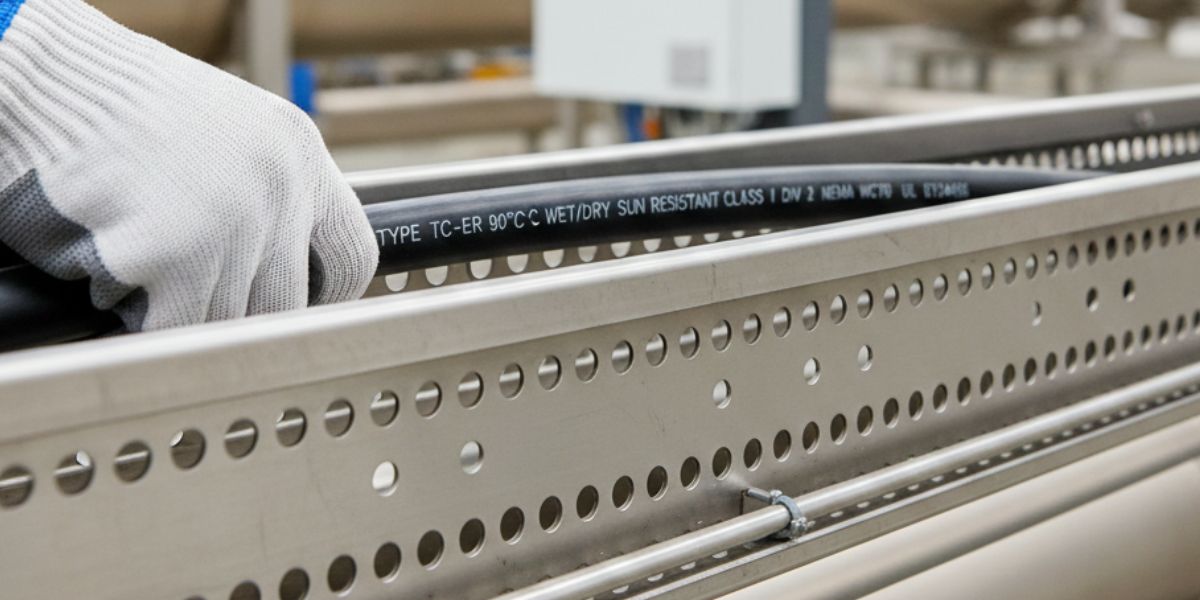
Every tray cable jacket includes printed markings that tell you its performance, approvals, and rating status. Here's a breakdown of what to look for and what it tells you:
Example Jacket Marking: 12 AWG 3C TC-ER-JP SUN RES DIR BUR 600V 90C DRY/75C WET UL
Marking Element | What It Means |
|---|---|
12 AWG 3C | 12-gauge, 3-conductor |
TC-ER-JP | Tray Cable, Exposed Run, with JP meaning "Jacketed Power" |
SUN RES | Sunlight resistant—approved for outdoor use |
DIR BUR | Direct burial approved |
600V | Rated for 600 volts |
90C DRY / 75C WET | Operating temperature limits based on environment |
UL | UL listed to applicable standard (typically UL 1277 or 2225) |
Distributor Pro Tip: Many contractors will call with vague specs: "I need 3-conductor 12-gauge tray cable." If you ask the right questions about sunlight, burial, exposed run, or hazardous locations, and then match that to the jacket data, you can save their install and win the account.
Why This Knowledge Matters: Getting Tray Cable Right
It's easy to treat tray cable as another line item or SKU in the catalog. But for your customers, especially contractors and engineers working under pressure, the cable is not the commodity. The risk is.
When a distributor misquotes or mislabels a tray cable, the consequences can ripple through an entire jobsite:
Failed inspections
Delayed permits
Emergency reorders
Frustrated contractors who look elsewhere next time
On the other hand, when you understand the nuances—how TC-ER differs from TC, what flame tests actually prove, and how jacket markings align with NEC code—you stop being a passive supplier and start becoming a technical asset.
Your Source for Tray Cable
At Distributor Wire & Cable, we understand that Tray Cable business lives and dies on availability. Our model is built around maintaining the stock depth that allows you to say "yes" to contractor requests without hesitation.
In-Stock Tray Cable: We maintain inventory across commonly specified tray cable constructions, including XLP/PVC TC-ER, VNTC, and VFD tray cable used in control, power, and instrumentation applications.
No Cut Charges: Tray cable orders frequently come in odd lengths. A 347-foot run doesn't round up neatly. Unlike manufacturers who charge cutting fees, we cut to your specification at no additional charge. Your contractor gets exactly what they need, and you don't have to explain cutting upcharges.
Same-Day Shipping: Orders placed by early afternoon ship the same day from our U.S. distribution network. When your contractor calls at 7 AM needing VNTC, you can confirm shipping before they finish their coffee.
No Minimum Orders: A single-reel order receives the same attention and turnaround as a project with twenty reels. We're here to support your business at whatever volume makes sense for each opportunity.
fastQuote Access: Our fastQuote platform provides instant pricing and availability on our complete tray cable product line. When you need a quick answer for your contractor, you can verify stock and pricing without waiting for callbacks.
Be the Expert Your Customers Need
Tray cable may not grab headlines, but in the electrical world, it's everywhere—and the people who truly understand it are rare. By taking the time to master how it works, where it belongs, and what makes it code-compliant, you're investing in more than just product knowledge. You're building a reputation for accuracy, reliability, and support.
And in this industry, that reputation is worth far more than any single sale.
Need help choosing the right TC cable for your next big job? Contact our team or explore our fastQuote tool for instant pricing and availability.