
Data Center Medium Voltage Infrastructure: Cable Selection for Reliability
Written By: Craig Keller
Posted February 4, 2026

When a data center goes dark, millions of dollars evaporate in minutes. That's why data center engineers invest in reliability. Systems where every component, every connection, and every foot of medium voltage cable must perform flawlessly 24/7/365 are what they're after. For electrical distributors, understanding data center infrastructure requirements transforms you from a cable supplier into a critical infrastructure partner.
Understanding Data Center Power Architecture
Data centers operate differently than any other commercial facility. Where a typical office building might have a single utility feed with basic backup power, data centers deploy multiple layers of redundancy that would seem excessive anywhere else. The power path for a data center starts at the utility connection (typically at 12.47kV or 13.8kV), stepping down through multiple transformation stages to eventually reach the servers.
Medium voltage cable forms the backbone of this system, carrying power from utility sources to main switchgear, from generators to transfer switches, and between critical distribution points. Every cable run represents a potential failure point, which explains why data center engineers obsess over cable selection, routing, and maintenance. When Amazon loses $220,000 per minute during an outage at one of their data centers, the stakes become clear. Your contractor customers working on these projects understand that cable selection isn't about finding the cheapest option; it's about preventing catastrophic financial losses.
The scale of this market opportunity continues accelerating. , with more than 40 percent of that spending invested in the United States. , with well over half of them located in the U.S. The analysis shows that global demand for data center capacity can more than triple by 2030, with U.S. data center demand growing 20 to 25 percent per year over the same period.
Modern data centers classify their reliability using the Uptime Institute's Tier system, and these classifications fundamentally change how you specify, quote, and support medium voltage cable sales. Tier III facilities require N+1 redundancy, providing enough backup to lose any single component without affecting operations. Tier IV facilities demand 2N redundancy, meaning complete duplicate systems where one entire system can fail while the facility continues operating. Understanding these distinctions helps you recognize why data center cable orders arrive with quantities that seem excessive until you understand the redundancy philosophy driving them.
The Economic Reality Driving Your Opportunity
The numbers tell a story that every electrical distributor needs to understand. . Since 2019, office construction has declined 19% while data center construction has accelerated over 200%. According to Harvard economist Jason Furman, U.S. GDP growth in the first half of 2025 was almost entirely driven by investment in data centers and related AI technologies.
For electrical distributors, this translates to substantial opportunity. Analysis indicates that , including electrical distributors, IT hardware wholesalers, and infrastructure suppliers. Given that data center infrastructure spending (including construction, electrical, HVAC, and power) totals about $78 billion, this creates roughly $47 billion in opportunity for distributors. The gray space infrastructure (electrical and HVAC systems) represents 20-30% of total construction value, and that's where medium voltage cable dominates the specification.
The growth trajectory shows no signs of slowing. , and these AI applications require substantially more power than traditional computing loads. This drives the medium voltage cable requirements that create your opportunities.
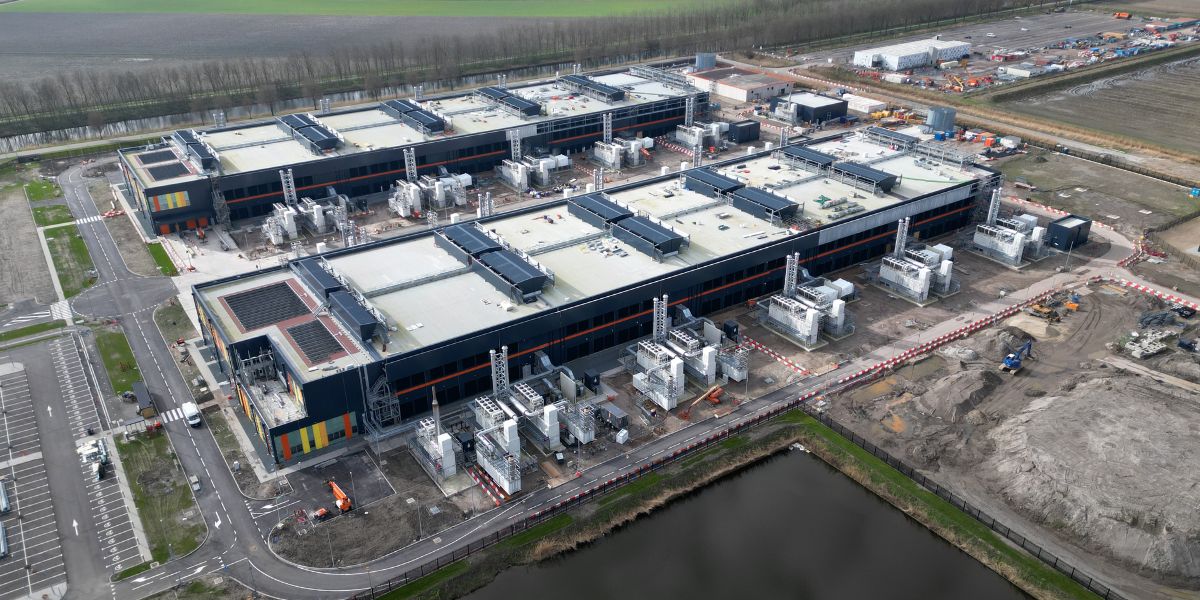
Redundancy Designs and Cable Implications
N+1 Redundancy: The Standard Approach
N+1 means having one more than you need. If a data center needs three generators to carry the load, they install four. If they need two utility feeds, they bring in three. This philosophy extends directly to medium voltage cable selection and creates specific opportunities for distributors who understand the implications.
In N+1 designs, data centers typically run their normal load across all available paths, operating each at partial capacity. A facility with three 15kV feeds might run each at 60% capacity, ensuring that if one fails, the remaining two can handle 90% load (still within acceptable limits). This approach affects cable selection because engineers must size cables for both normal partial-load operation and emergency full-load conditions.
The MV-105 cables that DWC stocks become particularly valuable here. While MV-90 would technically work, the extra temperature capacity of MV-105 provides operational margin during emergency conditions. That additional 15°C makes the difference between riding through an emergency and cascading into failure. When you're quoting 15kV MV-105 cable with EPR insulation from DWC's inventory, you're offering more than higher temperature rating; you're providing the operational cushion that prevents million-dollar outages. For a complete understanding of why MV-105 temperature ratings matter in critical applications, see our comprehensive guide to copper MV-105 cable selection.
2N Redundancy: Complete Duplication
2N redundancy takes reliability to the extreme by creating completely independent power paths. Think of it as building two complete power systems occupying the same space. Every utility feed has a mirror. Every transformer has a twin. Every cable run has a duplicate following a diverse path.
This design philosophy creates massive cable requirements, and understanding this helps you avoid the shock when seemingly impossible quantities hit your desk. A data center that would need 5,000 feet of medium voltage cable in a conventional design might require 12,000 feet in a 2N configuration. That's not just double for redundancy, but additional length for diverse routing paths that physically separate redundant systems. When these projects appear at your counter, the numbers make sense once you understand the underlying requirements.
For 2N systems, consistency becomes critical. Data center engineers want matched cables for A-side and B-side feeds. They want the same manufacturer, the same production run if possible, with the same electrical characteristics. They're eliminating variables that could cause unbalanced operation. DWC's ability to supply consistent product matters enormously here. You're not just filling an order; you're ensuring system balance that prevents operational problems your contractor customers would face if cables from different production runs exhibit different electrical characteristics.
The table below compares how these redundancy levels affect cable requirements and what it means for your quoting approach:
Redundancy Level | Cable Quantity Factor | Key Requirements | Your Margin Opportunity |
N+1 (Tier III) | 1.5-2x standard design | Partial capacity operation, emergency overload capability | 18-22% (complexity + reliability focus) |
2N (Tier IV) | 2.5-3x standard design | Complete path diversity, matched cable sets, independent routing | 20-25% (high volume + specification rigor) |
The Power Infrastructure Challenge
The electrical demands driving medium voltage cable requirements continue escalating. , three times the current level of consumption. This substantial new load on regional grids requires new supply build-outs and incremental transmission expansion, creating the infrastructure projects where your medium voltage cable opportunities emerge.
About 70 percent of projected 2030 demand will come from hyperscalers, the tech giants building large-scale facilities that consume extraordinary amounts of cable. These organizations work on building large campuses to capture the value of colocated compute, resulting in sites that often cover hundreds of acres. Each campus requires miles of medium voltage cable for primary distribution, and the compressed construction schedules these projects operate under create premium opportunities for distributors who can deliver quickly.
Cable Routing Diversity Requirements
Physical separation defines modern data center cable routing. It's not enough to have redundant cables. They must follow different paths, enter through different rooms, and avoid common failure points. This requirement stems from hard-learned lessons where redundant systems failed simultaneously because their cables shared a conduit or pathway.
Horizontal and Vertical Separation Standards
Data center standards typically require 15-20 feet of horizontal separation between A-side and B-side medium voltage feeders. They route through different sides of the building, different cable tray systems, different concrete encasements. Vertical separation matters too, with redundant feeds entering at different elevations to protect against flooding or vehicle impact.
This separation dramatically increases cable lengths compared to direct routing. A straight-line distance of 200 feet might require 350 feet of cable to achieve proper separation. When your contractor customers seem to be over-ordering based on building size, they're usually accounting for diversity routing. Understanding this helps you ask intelligent questions rather than questioning their quantity estimates: "Have you factored in your diversity routing requirements?" This positions you as knowledgeable partner rather than simply taking orders, and it prevents the embarrassment of suggesting they've calculated incorrectly when they actually understand their requirements better than you initially realized.
Entry Point Diversity
Medium voltage cables enter data centers through dedicated entry rooms, each designed as a hardened vault. Tier IV facilities require at least two entry points on different sides of the building, fed from different utility substations when possible. Some facilities add a third entry point for generator feeds, creating a triangle of power sources that eliminates single points of failure.
Each entry point needs specific cable configurations, and recognizing these distinctions helps you anticipate your contractor customers' needs before they fully articulate requirements. Utility feeds typically use 15kV or 25kV cable with full concentric neutral for direct burial approach. Generator feeds might use MV-105 with EPR insulation for the higher temperature rating near generator connections where ambient temperatures run hotter than typical cable routing environments. Understanding these distinctions helps you suggest appropriate products from DWC's portfolio and positions you as consultant rather than order-taker.
When your contractor customers mention multiple entry points or diverse utility feeds, recognize that you're hearing indicators of substantial cable quantities and potentially multiple cable specifications within a single project. Request a fastQuote from DWC for each configuration rather than trying to force one cable type to serve all applications. The specifications exist for good reasons, and your role is helping your customers meet them properly rather than looking for shortcuts that could compromise system reliability.
Fire-Rated Cable Selection for Data Centers
Fire represents an existential threat to data centers. Beyond the obvious damage, smoke from burning cables can destroy sensitive equipment throughout the facility. This drives specific cable selection requirements that create opportunities for distributors who understand the options and can guide your contractor customers through decisions that balance cost, performance, and safety requirements.
Low Smoke Zero Halogen (LSZH) Requirements
Many data centers specify LSZH jacketed cables for indoor medium voltage runs. When standard PVC burns, it releases toxic halogen gases and dense black smoke. LSZH compounds produce minimal smoke and no halogen gases, protecting both equipment and personnel during fire events. The servers and networking equipment in data centers represent millions of dollars in capital investment, and smoke contamination from a cable fire could destroy equipment far from the fire source.
DWC's standard medium voltage cables come with PVC or CPE jackets serving the majority of applications, but LSZH options are available through special order. The conversation here becomes consultative rather than transactional: "Are your indoor cable runs in occupied spaces or near sensitive equipment? Do your specifications require LSZH for smoke containment?" When LSZH is required, lead times extend to 10-12 weeks, making early identification critical for project scheduling. This is where understanding requirements during initial conversations protects your contractor customers from schedule delays that occur when they discover LSZH requirements late in the project.
Request a fastQuote from DWC when LSZH specifications appear, noting the jacket requirement clearly. We'll provide accurate lead times so you can set proper expectations with your customers rather than discovering long lead times after they've committed to project schedules.
Mineral Insulated (MI) Cable Considerations
Some data centers specify mineral insulated cable for critical circuits that must survive fire conditions. MI cable uses magnesium oxide powder insulation within a copper or stainless steel sheath, surviving temperatures that would vaporize conventional cables. These are typically limited to the most critical circuits where power must continue flowing even during active fire conditions (think life safety systems and emergency shutdown controls).
This is where partnership matters and where transparency serves you better than false promises. DWC doesn't stock MI cable because it's highly specialized with limited applications. When your customers need it, the honest response maintains relationships better than pretending you can supply something you can't: "We don't carry that, but let me connect you with our technical team to explore sourcing options." Often, further discussion reveals that properly rated conventional cables with fire-wrap systems meet their needs, and those are products DWC can readily supply.
The key is recognizing when MI cable represents genuine specification requirement versus engineer's first-pass specification that could be met through alternative approaches. When your contractor customers mention fire survival requirements, help them understand their options before committing to expensive specialty cable that may not be necessary.
Fire-Wrap Systems and Cable Selection
Most data centers achieve fire ratings through wrap systems rather than exotic cables. These systems encase standard medium voltage cables in ceramic fiber blankets or intumescent materials that expand when heated, protecting the cables for rated periods (typically one, two, or three hours depending on code requirements).
This approach works perfectly with DWC's standard MV-90 and MV-105 cables, creating opportunities where you can supply readily available stock material rather than waiting on specialty cable lead times. The key is ensuring proper cable derating for the thermal insulation effect of fire wrap. A 500 MCM cable wrapped for 2-hour fire protection might only carry the ampacity of a 350 MCM cable in normal conditions because the fire wrap traps heat that would normally dissipate to surrounding air.
Understanding this derating requirement helps you guide your customers toward larger conductors when fire wrap is planned. When they mention fire-rated cable requirements, ask whether they're planning fire wrap systems or need inherently fire-rated cable. If fire wrap is the approach, verify whether their conductor sizing accounts for the derating effect. That question positions you as knowledgeable about installation realities rather than just quoting whatever size they initially request, and it prevents the problem where they install undersized cable that overheats during normal operation because fire wrap derating wasn't considered during design.
Predictive Maintenance and Cable Selection
Data centers don't wait for failures. They predict and prevent them through sophisticated monitoring systems that track cable health and identify developing problems before catastrophic failure occurs. This philosophy drives cable selection toward products that support monitoring and maintenance strategies. Understanding these requirements helps you position appropriate products and add value beyond the initial sale.
Partial Discharge Monitoring Compatibility
Modern data centers embed partial discharge (PD) sensors throughout their medium voltage systems. These sensors detect the tiny electrical discharges that precede insulation failure, allowing replacement before catastrophic failure occurs. Partial discharge represents insulation breakdown that's begun but hasn't yet progressed to complete failure, and detecting it early prevents the outages that cost data centers millions.
Cable selection affects PD monitoring effectiveness. Cables with extruded insulation like the EPR and XLPE types DWC supplies work excellently with PD monitoring. The consistent dielectric properties and smooth shield interface provide clean signals for monitoring systems. When your customers mention predictive maintenance programs or partial discharge monitoring, emphasize that DWC's EPR-insulated cables are particularly well-suited for these applications due to their stable electrical characteristics. This positions the cables you're already stocking as the right choice for their monitoring strategy rather than requiring specialty products.
Temperature Monitoring Integration
Data centers increasingly embed fiber optic temperature sensors within cable runs or use thermal cameras to monitor termination points. This real-time temperature data feeds into predictive maintenance systems that identify developing problems before failure. Rising temperatures indicate increased resistance (often from deteriorating connections), overloading, or inadequate cooling, and identifying these conditions early prevents failures that would take down critical loads.
MV-105 cables from DWC's inventory provide extra margin for these monitoring systems. The higher temperature rating gives operations teams more time to respond when monitoring shows temperature rises. It's the difference between an urgent maintenance window and an emergency shutdown. This operational flexibility justifies the premium price of MV-105 over MV-90, and explaining this to your contractor customers helps them understand why their data center engineers specify the higher-rated cable despite the cost difference.
When you're quoting MV-105 for data center applications, don't just accept it as specification requirement. Explain to your customers that the 105°C rating provides operational margin their facility managers will appreciate when temperature monitoring systems alert them to developing problems. That additional 15°C might represent several hours of additional response time before emergency conditions force shutdown.
Shield Integrity Testing Requirements
The shield system in medium voltage cables provides the ground reference that makes safe operation possible. Data centers regularly test shield continuity and integrity, looking for corrosion or damage that could compromise protection. These tests occur during initial acceptance, periodically during operation, and after any event that might have stressed the cable system.
DWC's cables with copper tape shields work well for these testing programs. The uniform tape construction provides consistent test results, unlike wire shields where individual wire breaks might not affect overall performance but trigger maintenance alerts. This seemingly minor detail matters when your customers are developing maintenance procedures, and understanding it positions you as genuinely knowledgeable about their operations rather than just knowing product specifications.
When your contractor customers mention ongoing maintenance programs or ask about shield testing compatibility, this is your opportunity to demonstrate knowledge that extends beyond basic product characteristics. Explaining that copper tape shields provide cleaner test results helps them understand why you're recommending specific constructions rather than just quoting whatever's cheapest or most readily available.
Special Considerations for Data Center Applications
Harmonic Distortion and Cable Selection
Data centers generate significant harmonic distortion from their thousands of switching power supplies. Modern servers, storage systems, and networking equipment all use switch-mode power supplies that draw non-sinusoidal current, creating harmonics that propagate back through the electrical system. These harmonics cause additional heating in cables beyond what ampacity tables predict, requiring derating or oversizing to prevent overheating.
The conversation with your contractor customers starts with a simple question that reveals whether they've accounted for this effect: "What's your expected harmonic distortion level?" Most data center engineers expect 5-8% total harmonic distortion (THD). At these levels, cables need roughly 10% derating from standard ampacity tables. That 500 MCM aluminum cable rated for 450 amps might only safely carry 400 amps in a high-harmonic environment.
DWC's larger conductor sizes (750 MCM and 1000 MCM) often make more sense when harmonics are considered. When your customers initially request 500 MCM cable, asking about harmonic distortion and suggesting they verify whether the next larger size is appropriate demonstrates technical knowledge that separates you from distributors who simply quote whatever size is requested. You might increase your sale while simultaneously helping your customer avoid undersized cable that overheats during operation.
Parallel Feed Requirements
Large data centers often parallel multiple smaller cables rather than pulling single large conductors. Four 500 MCM cables might replace one 2000 MCM cable, providing installation flexibility and redundancy. If one cable fails, the others continue carrying partial load while the failed cable is replaced. This approach also simplifies pulling because four moderately-sized cables are easier to handle than one massive conductor.
This approach requires careful attention to cable matching, and this is where DWC's consistent supply creates competitive advantage. All parallel cables must be identical in construction (same manufacturer, same insulation type, same shield construction). They must be of an identical length to ensure balanced current sharing and align with strict engineering standards. They also must follow similar routing paths with similar thermal environments. Any variation causes unbalanced current distribution, with some cables carrying more load than others and potentially overheating.
When your customers order twelve 500 MCM cables for a parallel feed application, they need uniformity you can guarantee. DWC's relationship with major manufacturers means we can supply matched sets, ensuring the electrical consistency data center installations require. This isn't just a nice feature; it's a requirement for proper parallel operation, and your ability to deliver it through DWC's inventory management separates you from distributors who source from wherever they can find availability.
Future Expansion Planning
Data centers plan for growth from day one. Initial builds typically use 40-60% of ultimate capacity, with infrastructure sized for full build-out. This affects cable selection because installing larger cables initially costs far less than replacing them later. Pulling cable through installed conduit once is expensive. Pulling it twice (once for initial capacity, then replacing it for ultimate capacity) is wasteful and disruptive.
When discussing data center projects with your contractor customers, always ask about ultimate capacity, not just initial load. That customer requesting 4/0 aluminum for a 250-amp circuit might need 500 MCM when you learn they're planning 400-amp ultimate load. You've just saved them a future replacement while increasing your sale today. This is consultative selling rather than order-taking, and it builds the relationships that create long-term customer loyalty.
The conversation is straightforward: "What's your ultimate design capacity for this circuit? Are we sizing cable for initial load or full build-out?" When they haven't considered this, you've identified a potential problem before installation. When they have considered it, you've demonstrated that you understand data center design philosophy and can speak their language.
The Broader Economic Impact Creating Secondary Opportunities
The mega data centers built on large tracts in rural areas employ thousands during construction and hundreds thereafter for operations. , requiring crews of site developers, equipment operators, construction workers, electricians, and technicians (many earning wages upward of $100,000 per year). For steady-state operations, for facility managers, engineers, technicians, and maintenance staff.
These facilities create their own economic ecosystems. Additional residential and commercial opportunities sprout up in these areas as workers need housing and services. Those secondary opportunities (the housing developments for workers, the commercial centers serving new populations) all need electrical infrastructure, and much of that infrastructure runs on medium voltage cable. This ripple effect creates opportunities for a broader array of electrical distributors beyond just those directly serving the data center construction.
Northern Virginia exemplifies this dynamic. The region accounts for 13 percent of the world's data center capacity, and . The electrical infrastructure supporting both the data centers themselves and the communities that developed around them represents substantial ongoing business for distributors positioned to serve these markets.

Supporting Your Data Center Customers
Technical Conversations That Build Credibility
Your counter staff and sales team don't need engineering degrees, but understanding key data center terms builds credibility that wins business and protects margins. When your customers mention these concepts, recognizing them and understanding their implications positions you as knowledgeable partner rather than simple product supplier.
Power Usage Effectiveness (PUE): The ratio of total facility power to IT equipment power. Modern data centers target 1.2-1.4 PUE, meaning only 20-40% overhead for cooling, lighting, and power distribution. Lower PUE means higher efficiency, driving demand for lower-loss cables. When customers mention aggressive PUE targets, they're telling you that cable losses matter and that copper conductors or larger aluminum sizes might be justified despite higher first cost.
Mean Time Between Failure (MTBF): How long equipment operates between failures. MV cables should have MTBF measured in decades. When data center engineers talk about MTBF requirements, they're explaining why quality matters more than price. This is your opportunity to emphasize DWC's supply from major manufacturers with proven reliability rather than positioning on price alone.
Recovery Time Objective (RTO): How quickly systems must recover after an outage. Zero RTO means continuous availability, driving the redundancy requirements that create your cable opportunities. When customers mention zero RTO or near-zero RTO, you're hearing why cable quantities seem excessive and why redundancy requirements justify the scope of their orders.
Concurrently Maintainable: Systems that allow maintenance without shutdowns. This requires redundant cable paths and extra capacity so one path can be taken offline for service while others continue carrying load. When customers mention concurrent maintainability, they're explaining why they need N+1 or 2N redundancy rather than simple backup systems.
Value-Added Services That Win Business
Data centers value partners who simplify their operations and solve problems beyond just supplying cable. These service offerings create competitive differentiation that protects margins even when competitors quote lower cable prices.
Cut-to-Length Services: Precise lengths reduce waste and installation time. DWC can provide cables cut to specification, saving field cutting time and eliminating the waste that occurs when contractors order standard reel lengths and discard excess. When you're quoting substantial quantities, offering cut-to-length service demonstrates attention to their total project cost rather than just pushing maximum footage.
Testing Coordination: Acceptance testing is mandatory for medium voltage installations, and your contractor customers need relationships with qualified testing companies. Connecting them with testing services adds value beyond the cable sale and ensures they're prepared for the inspection requirements they'll face. Maintaining a list of qualified testing companies in your market and providing referrals positions you as full-service partner rather than material supplier.
Documentation Support: Data centers document everything for compliance, maintenance records, and future reference. Providing detailed cable specifications, test reports, and certificates helps your customers maintain compliance records without chasing documentation. When you quote cable, include complete specification sheets and compliance documentation proactively rather than waiting for them to request it. DWC can provide specification sheets with your quote and source test reports upon request.
Emergency Stock Programs: Partner with your data center customers to understand their critical spare requirements. These facilities need emergency replacement cable available immediately, and maintaining local stock of their standard configurations positions you as their emergency response partner. The margins on emergency stock purchases justify the inventory investment, and the relationship builds long-term business that extends beyond emergency calls.
Building Your Data Center Market Position
Data center medium voltage infrastructure demands more than quality cable. It requires understanding how reliability drives every decision, how redundancy creates massive cable requirements, and how seemingly small specification details can determine system performance. Your success in this market stems from knowledge that transforms you from cable supplier to trusted infrastructure partner.
When you're working with data center customers, recognize that every cable is critical. There's no such thing as a non-essential circuit in a data center. Each cable you quote could be the one that prevents (or causes) a million-dollar outage. Redundancy drives quantity, so don't be surprised by large orders. 2N designs with diverse routing can triple traditional cable requirements. Consistency matters as much as quality because matched cables for redundant feeds ensure balanced operation. Temperature ratings provide operational margin because MV-105's extra capacity isn't luxury; it's insurance against cascading failures during emergency conditions.
Special requirements are standard in data center work. LSZH jackets, parallel feeds, harmonic derating, fire-wrap systems, and predictive maintenance compatibility aren't unusual requests but normal specifications for data center projects. Your role extends beyond order-taking to consultation. Understanding data center requirements lets you ask intelligent questions, identify unstated needs, and prevent costly specification errors that would damage your contractor customers' relationships with their data center clients.
Positioning Your Team for Success
Your counter staff should learn to recognize data center projects by redundancy requirements and large quantities that signal infrastructure scale. Training them to ask about temperature rating requirements (MV-90 vs MV-105) and identify fire rating requirements early accounts for extended lead times that affect project scheduling. Help them understand that rushed timelines are normal in data center construction, not exceptions requiring premium treatment. Data centers operate on compressed schedules because delayed capacity represents millions in lost revenue opportunity.
Your inside sales team should develop relationships with data center contractors who work regionally. These relationships create recurring business as contractors move from project to project. Create standard packages for common data center configurations so you can quote quickly when opportunities appear. Build quick-quote templates for redundant feed applications, and track testing company contacts for customer referrals that add value beyond cable supply.
Your technical support (whether internal staff or through DWC's resources) should understand derating factors for harmonics and fire-wrap installation. They should be prepared to calculate voltage drop for the long diverse routing paths that data center separation requirements create. They need to verify shield specifications for monitoring system compatibility and document all technical discussions for future reference. This documentation protects you when questions arise and provides the detailed records data center customers appreciate.
Request a fastQuote from DWC whenever data center projects appear. Our stock depth in MV-105 configurations means we can support same-day shipping for common specifications, giving you the delivery speed that wins projects where compressed schedules demand immediate availability. For specialty requirements like LSZH jackets or unusual conductor sizes, we'll provide accurate lead times so you can set proper expectations rather than discovering delays after your customers have committed to schedules.
The Data Center Opportunity
Data centers represent the fastest-growing segment for medium voltage cable, and growth shows no signs of slowing. Artificial intelligence, autonomous vehicles, streaming media, and cloud computing all drive demand for more data center capacity. Each new facility needs miles of medium voltage cable, specified and installed to the highest reliability standards. The distributors who capture this business are those who understand how data centers think about reliability, how redundancy drives requirements, and how seemingly small details determine system performance.
Success in this market requires more than having cable on the shelf. It demands knowledge that transforms routine transactions into consultative partnerships. When you combine this understanding with DWC's quality products, consistent supply, and same-day shipping for stock configurations, you become an invaluable partner in critical infrastructure development rather than interchangeable commodity supplier.
The next time a data center project crosses your desk (with its overwhelming quantities, stringent specifications, and urgent timelines), you'll recognize opportunity rather than complexity. You'll ask the right questions about redundancy requirements, routing diversity, fire ratings, and future capacity. You'll provide valuable guidance on conductor sizing, temperature ratings, and derating factors. You'll deliver solutions that ensure reliable operation while building relationships that extend across multiple projects as data center construction continues its explosive growth.
That's how you transform from cable supplier to infrastructure partner. That's how you capture your share of the data center revolution. Request a fastQuote from DWC for your next data center project, and let us help you deliver the reliability these critical facilities demand.