
The History of Tray Cable: What Came Before VNTC and Why It Changed the Job
Written By: Craig Keller
Posted October 28, 2025

For most of the 20th century, industrial wiring was a grueling process of pipe, pulling lube, and long days wrestling individual conductors through conduit bends that were always “just a little too tight.”
While armored cable provided mechanical protection in rough areas, it was heavy, expensive, and slow to terminate. In massive facilities, refineries, paper mills, and steel plants, the sheer volume of wiring eventually outgrew these methods. Field crews often resorted to lashing bundles of single conductors to supports just to keep up with the scale of the project.
What the trade needed was factory-built cable that the Code would recognize for trays and raceways, one with predictable fire performance and markings an inspector could verify at a glance. That is the problem tray cable was engineered to solve.
By the mid-1970s, the National Electrical Code had a dedicated cable-tray article (then Article 318; today ) and an explicit tray-cable category: Type TC with construction and performance requirements in UL 1277. Those changes were not marketing; they came from years of committee work and testing in heavy industry to formalize trays as a wiring method and to define what “tray cable” had to be to earn that privilege.
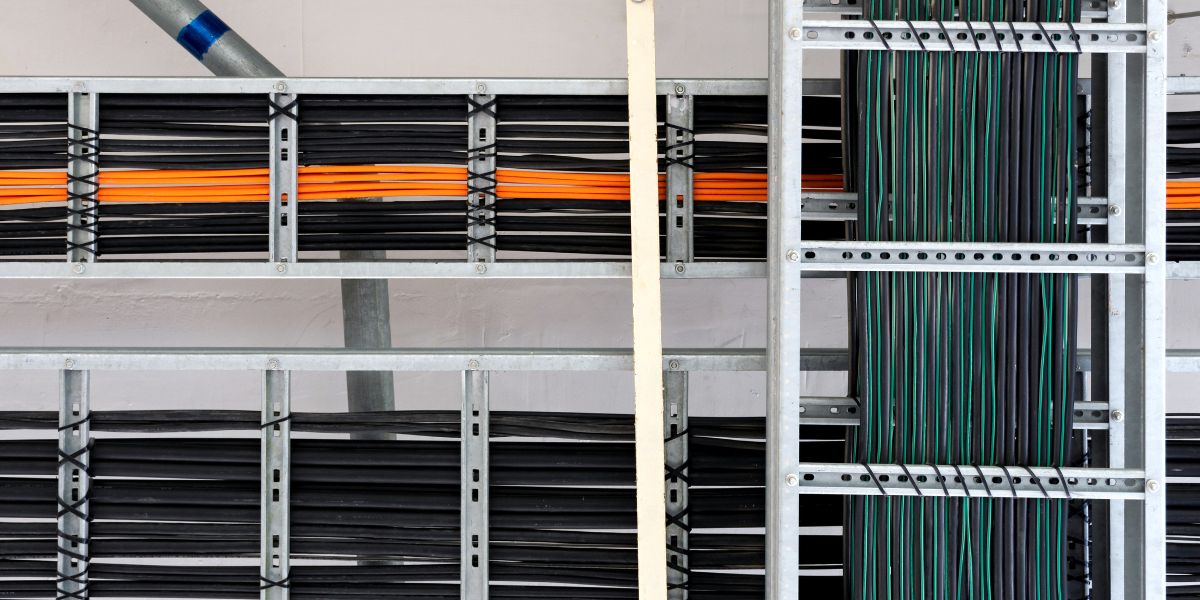
From Rigid Conduit to Type TC Cable
Tray systems themselves matured first, with early Code frameworks predating today’s numbering system. Before the Code and UL locked in a dedicated cable category designed specifically for those trays, the choices available on industrial job sites were familiar but labor-heavy:
THHN/THWN in conduit: Inspector-friendly and durable, but every circuit meant more pipe to bend and more conductors to pull.
Armored cable (AC/BX, later MC): Brought mechanical protection but increased weight and termination time.
To standardize these setups, established construction requirements for power and control tray cables. It mandated that Type TC must be a factory assembly of two or more insulated conductors under a nonmetallic sheath, and it locked in the uniform voltage classes (600V, 1kV, and 2kV) that distributors still see on jackets and submittals today.
The Evolution of VNTC and TC-ER
With the category defined, manufacturers optimized a practical build: PVC-insulated, nylon-skinned conductors bundled under a PVC jacket; what the trade calls VNTC (Vinyl Nylon Tray Cable). The materials felt familiar to crews used to THHN/THWN-type conductors; the difference was that they came as an engineered, listed cable that could be installed in trays, in raceways, supported outdoors on messenger, and (in tightly defined cases) run exposed. The result for the market was predictable inspections and faster installation timelines.
A big accelerant came later: TC-ER (Exposed Run). In the 1990s, the NEC and UL added an “ER” pathway for rugged unarmored tray cables. When a cable is , it can transition out of the tray and run exposed for a short distance with proper support and protection, rather than building a continuous raceway for every drop. That change reduced installation complexity on typical tray-to-tray equipment stubs.
What “short distance” actually means: the NEC exception allows a tray cable marked TC-ER to transition between trays and to utilization equipment for up to without continuous support, provided it’s not subject to physical damage and the exit is mechanically supported to protect the bend radius.
Fire Performance and the Vertical Tray Flame Test
Tray wiring concentrates a lot of polymer and copper in one place, so flame behavior matters. That’s why tray cables are evaluated with vertical tray flame tests. In North America, UL 1685 vertical-tray and the tougher are referenced in specs and data sheets. If a project engineer asks for “IEEE 1202/FT4,” they want proof that the cable resists flame spread in a tray configuration.
Type TC in Hazardous Locations
Another reason TC gained ground: the Code is explicit about when it’s acceptable in Class I, Division 2 (and other classified) areas. lists Type TC and TC-ER among the permitted wiring methods in Div 2 when terminated with listed fittings and installed per the section’s rules. For many industrial jobs, this clarity makes tray cable a viable, defendable choice where project specifications once defaulted to rigid pipe.
Why VNTC Tray Cable Standards Matter to Distributors
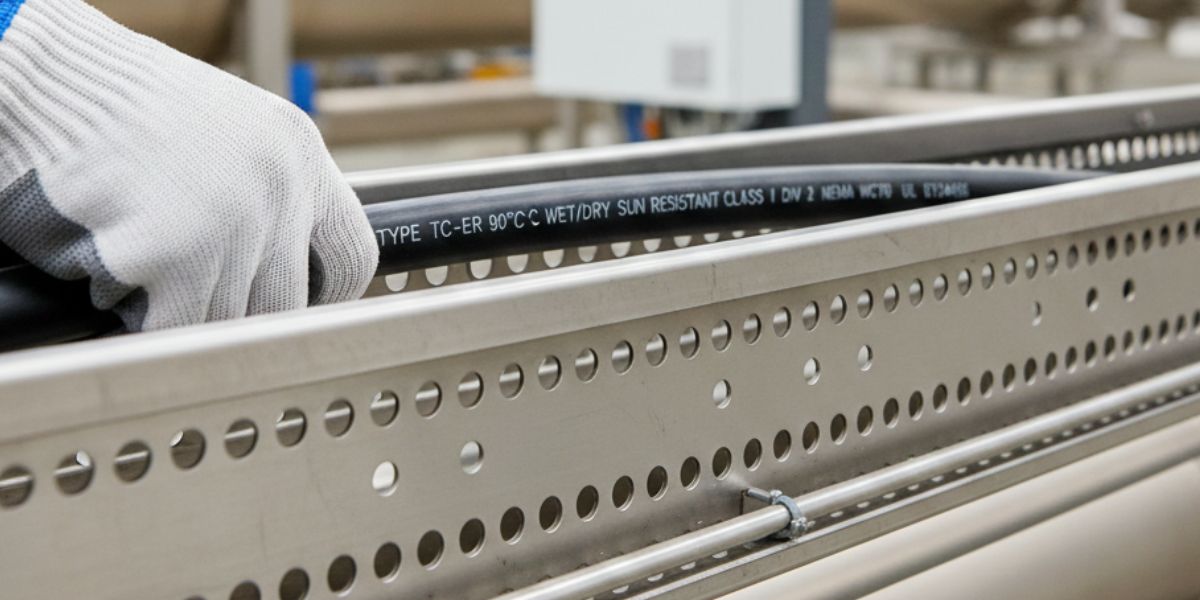
VNTC became popular because it solved a massive headache in the field, and that same history is what makes it a valuable asset for a local branch today. When a control cable carries multi-ratings like TC-ER, SUN RES, DIR BUR, and wet-location approvals, it isn’t just matching an engineer's submittal; it is actively eliminating inspection friction. For a distributor, understanding these specific stamps is the easiest way to protect project margins and keep industrial orders at your counter.
For a complete breakdown of how to verify these print strings and handle complex submittals, see our comprehensive .
Key Electrical Milestones: NEC Updates
Era | Key Regulatory Milestone | Impact on the Industry |
|---|---|---|
Mid-1970s | The Codification of Cable Trays NEC Article 318 (now Article 392) is refined by a technical subcommittee following heavy industrial trials. | Tray systems are officially recognized as a legitimate wiring method rather than an "oddball" field fix, opening up a massive new product category for wholesale distributors. |
Late-1970s | The Establishment of UL 1277 Power and Control Tray Cable gets a defined construction and performance standard covering 600V, 1kV, and 2kV classes. | Creates a uniform standard across the supply chain, ensuring that inspectors, engineers, and distributor sales reps all evaluate Type TC using the same criteria. |
1990s | The Creation of the TC-ER Pathway The NEC and UL introduce the "Exposed Run" (ER) pathway designation for rugged, unarmored tray cables. | Allows unarmored TC to make short exposed transitions legally and safely, cutting out needless rigid pipe for tray-to-equipment drops and shifting market demand toward ER jackets. |
VNTC Tray Cable in Modern Installations
VNTC fixed a grinding operational constraint for industrial installations: too much field labor for too little value on runs that didn’t actually need full rigid raceway or heavy armor. The Code and UL gave the industry a reliable product class with verified fire performance and clear installation rules; the subsequent ER option removed the last mile of pipe where it offered limited practical value.
The shift to tray cable wasn't just a material change; it was a rewrite of how a project goes together. Today, those hard-won jacket stamps like TC-ER and IEEE 1202 tell an inside sales team everything they need to know at a glance. They represent decades of code evolution designed to make installations safer and more efficient. That is why VNTC became the default control cable standard across modern facilities, and why it remains the definitive answer for the next industrial project quote to cross your counter.
DWC stocks VNTC, TC-ER, and full Type TC constructions across the voltage classes and multi-ratings discussed in this article. For pricing on specific construction, reach out to your DWC Account Manager or request a fastQuote today.