
Copper Theft in 2026: What Every Electrical Distributor Needs to Know
Written By: Craig Keller
Posted January 12, 2026

The threat isn't just on the jobsite anymore. It's in your inbox.
When most people think about copper theft, they picture stripped substations, darkened streetlights, or the grim headlines about someone electrocuted while cutting into a live line. And those images are accurate; copper theft has reached crisis levels across the United States, costing billions in damages and putting lives at risk.
But for electrical distributors, the threat has evolved. The physical theft of copper from jobsites and warehouses remains a real concern, but an equally dangerous threat now arrives disguised as a legitimate purchase order from a Fortune 500 contractor. Sophisticated fraudsters are impersonating real employees at real companies, using convincing email addresses and professional-sounding phone calls to trick distributors into shipping thousands of dollars in copper cable to addresses that exist only to receive stolen goods.
This article is designed to help electrical distributors understand both dimensions of the copper theft crisis (the physical and the fraudulent) and provides practical guidance for protecting your business, your customers, and your margins.
The Scope of the Physical Threat
The numbers are staggering, and they're getting worse.
According to FCC Commissioner Olivia Britt Trusty, speaking at the Copper Theft Crisis Summit in October 2025, there were at least 5,770 reported incidents of theft and vandalism against communications networks between May and December of 2024 alone. Those incidents disrupted internet service for more than 1.5 million Americans and caused millions of dollars in direct damage. Just think of what the downstream economic impact is here.
The U.S. Department of Energy has estimated that metal theft costs American businesses approximately $1 billion annually. The National Insurance Crime Bureau tracked 33,775 insurance claims for metal theft over a three-year period ending in 2012, with 96 percent of those claims specifically involving copper. That represented a 36 percent increase over the prior reporting window — and the problem has only accelerated since.
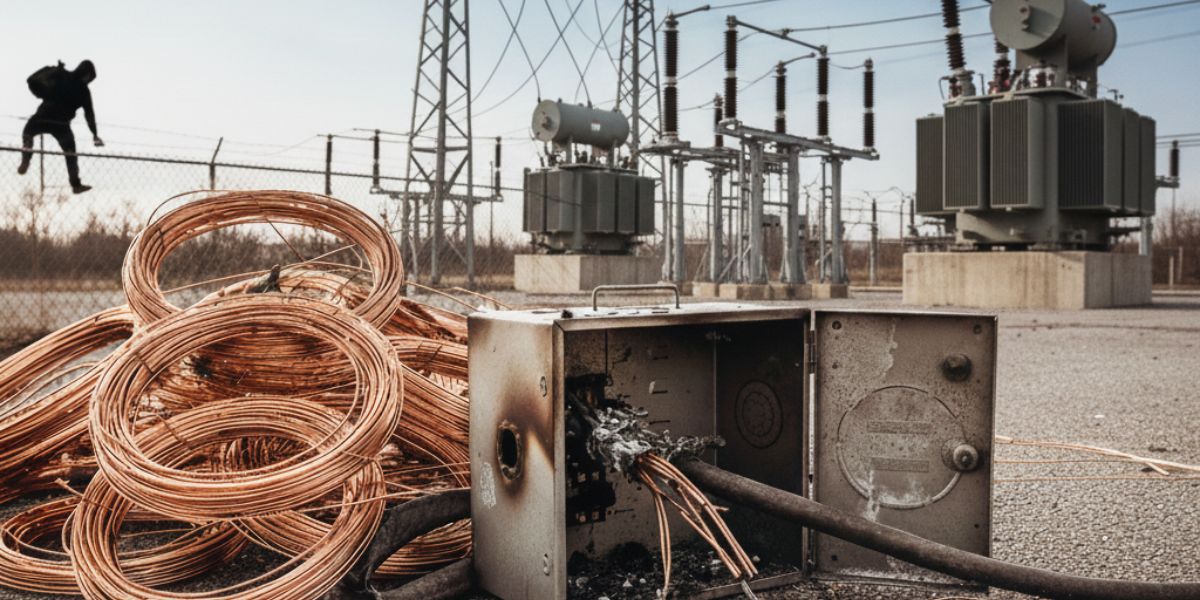
The FBI classified copper theft as a threat to critical infrastructure over a decade ago. Their intelligence analysts have documented thefts that disabled tornado warning sirens in Mississippi, knocked out power for nearly 4,000 residents in Florida, and compromised an FAA communications tower in Ohio. Thieves have targeted electrical substations, railroads, telecommunications networks, EV charging stations, and municipal lighting systems. In Gwinnett County, Georgia, thieves stole nearly 4,000 feet of cable which is about the length of thirteen football fields and left families and businesses offline for nearly a full day.
The damage is asymmetric in the most painful way possible. A thief might net $100 for a bundle of wire stripped from a streetlight, but the municipality faces a repair bill of $5,000 or more to replace the specialized cabling, fix damaged conduits, and deploy labor for repairs. When a 92-year-old woman in South Los Angeles lost her landline for months after copper thieves targeted her neighborhood, her life-alert system went dark, her home security cameras stopped working, and her family had no way to check on her except through caregiver visits. It took a combined LAPD and city task force initiative which led to 82 arrests in order to address the problem.
Why Copper? Why Now?
The economics make the risk calculation depressingly rational for criminals.
Copper is currently trading at approximately $6.00 per pound on the COMEX exchange (as of 01.12.2026), with scrap values ranging from $3.10 per pound for light copper to $4.35 per pound for #1 bare bright wire. These prices represent a dramatic increase from historical norms—the FBI documented a 500 percent price increase between 2001 and 2008, and the trend has continued upward with only periodic corrections.
Several factors are driving sustained demand and elevated prices. The global push toward electrification plays a big role in the uptick. From EV infrastructure to renewable energy installations to data center buildouts, electrification has created enormous demand for copper and an enormous surge in copper-related criminal activity. Supply constraints from major producing regions have also tightened availability. In mid-2025, the imposition of a 50 percent tariff on copper imports also added further upward pressure on domestic prices.
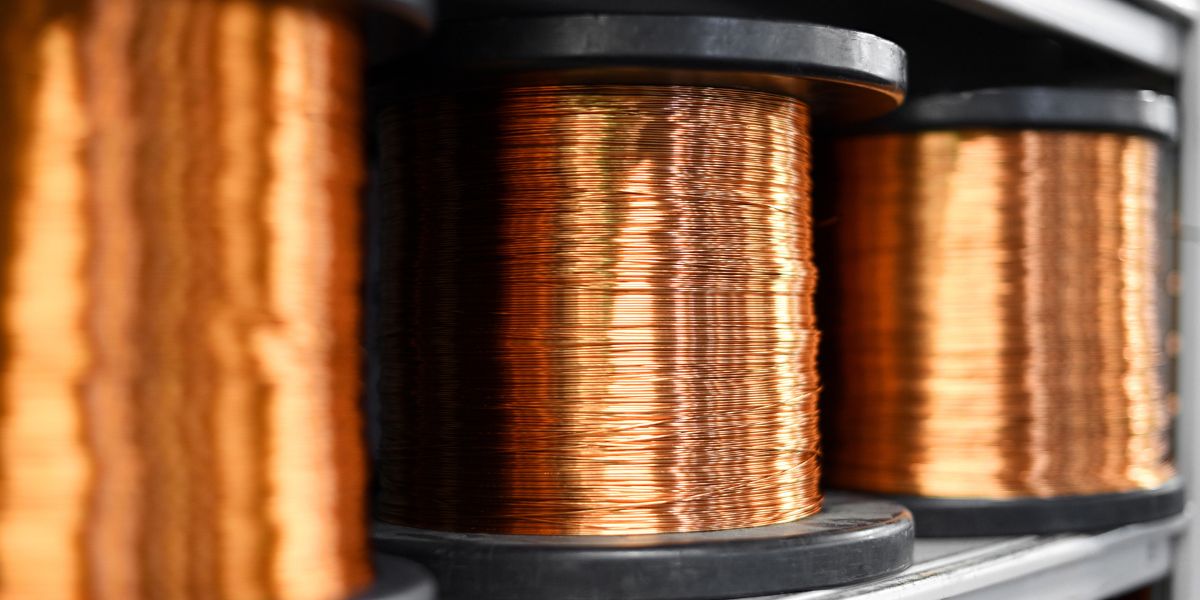
For thieves, the calculation is simple: copper is valuable, portable, and relatively easy to monetize through scrap yards. For distributors, this means that every reel of Medium Voltage or Tray Cable, every coil of bare copper ground wire, and every spool of building wire sitting in your warehouse represents a target.
The Targets: What Thieves Are After
Understanding what gets stolen can help distributors assess their own vulnerability.
Building Wire and THHN: The workhorse products of the electrical distribution business are also prime targets. THHN building wire's copper conductor, once stripped of its thermoplastic insulation and nylon jacket, commands premium scrap prices as bare bright copper.
Bare Copper Ground Wire: Already uninsulated, bare copper grounding conductors require no processing before sale to a scrap yard. This makes them particularly attractive to opportunistic thieves.
Power Cable and Medium Voltage: Larger gauge cables, such as medium voltage cable, contain more copper per linear foot, making them high-value targets despite their weight and difficulty of handling.
Telecom and Data Cable: While the copper content per foot is lower than power cable, telecommunications infrastructure has become a major target because of its accessibility. As Commissioner Trusty noted, thieves often cannot distinguish between copper and fiber in the dark—they cut through both, severing internet and 911 services for entire communities.
Jobsite Inventory: Contractors staging materials for large projects represent concentrated targets. A single theft from a commercial jobsite can net thousands of dollars in copper while the legitimate project bears the cost of delays and replacement.
Beyond the Loading Dock: The Fraud Threat
Physical security is only half the equation. For many distributors, the more insidious threat arrives via email or telephone.
The scale of the problem may surprise you. In a recent digital marketing campaign run by a major electrical distributor, approximately 70 percent of the inbound leads were fraudulent. This isn’t your typical Nigerian Prince scheme either that anybody could spot. These copper fraud schemes are highly sophisticated.
The copper criminals were posing as legitimate buyers from legitimate companies. On the surface all of these scam inquiries look like real business inquiries, which means that you need to stay on alert for them and learn how to catch them, too. Automated fraud detection systems caught and filtered all of these attempts, but the sheer volume underscores how aggressively fraudsters are targeting the electrical distribution channel.
Copper fraud schemes have grown increasingly sophisticated. Fraudsters research legitimate companies, identify real employees in procurement or purchasing roles, and then impersonate those individuals when contacting distributors. The impersonation is thorough: they reference real projects, use industry terminology, and provide contact information that appears credible at first glance.
Based on fraud prevention data, approximately 80 percent of the fraudulent inquiries that get caught by vetting systems involve impersonation of legitimate employees at real companies. This means that a simple Google search of the person's name will return a real LinkedIn profile for a real person who has a real job title, and a real company affiliation. The fraudster is counting on you to see those results and assume the inquiry is legitimate.
The deception is methodical. Fraudsters don't send sloppy emails from Gmail accounts hoping someone takes the bait. They build credible personas, manufacture professional-looking infrastructure, and execute their schemes with patience. Here's what a typical fraud attempt looks like from the distributor's perspective:
Step 1: The Initial Contact
A caller or email inquiry comes in referencing a well-known company which is often a large general contractor, a utility, or an industrial firm with a recognizable name. The fraudster claims to work in procurement or purchasing and references a large project, sometimes by name. They request a quote on copper building wire, typically in substantial quantities: 50,000 feet of THHN, full reels of 4/0, that sort of thing. The tone is professional. They sound like they've done this before.
Step 2: The Credible Details
When you Google the contact's name, you find a real person. There's a LinkedIn profile showing someone who works in procurement at the company they claim to represent. The job title matches. The company is legitimate and operates in a sector where large copper purchases make sense—construction, energy, data centers, manufacturing. Everything checks out on the surface.
Step 3: The Manufactured Infrastructure
The fraudster provides contact information that looks professional:
An email address with a business domain: purchasing@dpr-construction.net
A direct phone number, often with an area code that matches the company's headquarters or the project location
Sometimes a secondary contact "in the field" who can coordinate delivery
This is where the scheme hinges. The email domain isn't the real company's domain — it's a lookalike that the fraudster registered specifically for this con. The phone number routes to a burner phone or a VoIP line that the fraudster controls. None of these contact methods actually reach anyone at the legitimate company.
Step 4: The Push for Speed
Urgency is the fraudster's ally. They'll claim the project is behind schedule, that the GC is pressuring them, that they need material on the ground by Friday. This pressure is designed to short-circuit your vetting process. Legitimate buyers understand that new accounts require credit applications and verification. Fraudsters want you to skip those steps.
Step 5: The Delivery Trap
If the scheme succeeds, the fraudster provides a delivery address which is often a commercial property, a storage unit, or even a jobsite where they've arranged to intercept the shipment. The material arrives, someone signs for it, and it disappears into the black market before you realize the purchase order was fiction.
This structure gives your sales team a mental model for how these schemes unfold. When they recognize the pattern, they're far more likely to pause and verify before shipping product into the void.
Red Flags and Vetting Protocols
Protecting your business requires building verification steps into your sales process. The following indicators should trigger additional scrutiny:
Domain Verification: Every business email address includes a domain name which is the part after the @ symbol. When you receive an inquiry from purchasing@acme-electric.com, your first step should be to visit that domain directly in your browser. Type acme-electric.com into your address bar and see what loads. If the domain returns a 404 error, a parked domain page, or simply times out without loading, you're looking at a fraudulent domain 99% of the time. A legitimate company's email domain will resolve to their actual website.
Cross-Reference Against Known Domains: Google the company name independently and find their official website. Compare that domain to the one in the email address. Legitimate inquiries from DPR Construction will come from @dpr.com, not from @dpr-construction.net or @dpr-projects.com. If the domains don't match, the inquiry isn't legitimate.
Reverse Phone Lookups: Run suspicious phone numbers through a reverse lookup service. Fraudsters typically use recently activated numbers with no business registration history. A legitimate purchasing department at a major contractor will have phone numbers that trace back to their corporate infrastructure.
Terminology and Expertise Tests: Fraudsters are experts in theft, not in electrical distribution. Ask technical questions that a real purchasing professional would know. What's the project specification? What NEC requirements are driving the wire selection? Is this a prevailing wage job? A legitimate buyer will have ready answers; a fraudster will deflect, generalize, or get the terminology wrong.
Behavioral Indicators: Urgency without specificity is a red flag. So is resistance to standard verification procedures. Legitimate buyers understand that distributors need to vet new accounts—they work with credit applications and trade references all the time. Fraudsters push for speed because scrutiny is their enemy.
Voice and Accent Inconsistencies: This requires judgment, but if something feels off about a phone conversation such as an accent that doesn't match the claimed location, background noise that sounds like a call center rather than a construction trailer, or evasive answers to straightforward questions you need to trust your instincts and dig deeper.
Protecting Your Own Identity: Don't Let Fraudsters Wear Your Name
The fraud problem cuts both ways. While you're vetting incoming inquiries to make sure you're not shipping copper to criminals, someone else might be using your company's name to defraud your customers, your vendors, or companies you've never even done business with.
Website cloning is one threat vector, but email impersonation may be the more dangerous one. If a fraudster registers a domain that looks like yours, they don't just get a place to host a fake website — they get the ability to send emails that appear to come from your company. An email from bob.smith@borderslates.com looks an awful lot like a legitimate Border States employee to someone who is scanning their inbox quickly. The "t" and the "I" swap is easy to miss, in fact - YOU PROBABLY MISSED IT JUST NOW. This is especially dangerous on a mobile device or in a cluttered email client. That single character difference is all a fraudster needs to pose as your purchasing manager, submit RFQ forms to your suppliers in your name, or reach out to your customers with fraudulent offers.
Think about what that means in practice. A fraudster registers a misspelled version of your domain and starts contacting manufacturers or master distributors, submitting quote requests and placing orders as if they represent your company. The vendor sees a familiar name, a professional-looking email address, and maybe even correct industry terminology. They ship the material. The fraudster intercepts it. And when the invoice goes unpaid, the vendor comes looking for you (the real you) wondering why your accounts payable team has gone silent. Now you're spending time and legal resources untangling a mess you didn't create, and your reputation with that vendor has taken a hit through no fault of your own.

The same scheme works in reverse. A fraudster posing as your sales team can reach out to your customers, offer pricing on copper wire, collect payment, and disappear. Your customer thinks they bought from you. When the material never arrives and they call your actual office, you're the one explaining that you never took their order, and they're the one wondering if they can ever trust doing business with you again.
The defense starts with your domain portfolio. If your company operates at wesco.com, you should also own wesco.net, wesco.org, wesco.co, and as many other top-level domain variations as you can reasonably acquire. But TLD variants are just the beginning. You also need to think about typos, common misspellings, and character substitutions that could fool someone at a glance. Border States Electric should probably own borderstate.com (singular), borderslates.com (the L-for-I swap), border-states.com (hyphenated), and any other plausible variations that a customer, a vendor, or a fraudster might type into a browser or see in an email address. Every domain you don't own is a domain someone else can register and use to impersonate you.
This isn't paranoia. It's digital hygiene. And it serves triple duty: brand protection, reputation management, and fraud prevention all wrapped into one relatively inexpensive investment. Domain registration costs are trivial compared to the cost of a single successful fraud scheme conducted in your name, or the cost of rebuilding trust with a vendor who got burned by someone pretending to be you. Set up redirects so that anyone who lands on a variant domain gets routed to your legitimate website. You capture the traffic, you control the narrative, and you deny fraudsters the infrastructure they need to impersonate your company via email or web.
And while you're at it, consider the defensive registrations that exist purely to keep bad actors out. You probably don't want to build a website at yourcompany.sucks — but you definitely don't want someone else to own it either. The same goes for domains like yourcompany-scam.com or yourcompany-complaints.net. These aren't assets you'll ever use. They're assets you hold specifically so that nobody else can weaponize them against you.
The electrical distribution business has always been built on relationships and reputation. In a digital environment, protecting that reputation means controlling your online identity as carefully as you control your physical inventory. When you own the domains that could be used to impersonate you, you're not just protecting yourself—you're protecting every customer and vendor who might otherwise fall victim to a fraudster wearing your name.
Protecting Your Physical Inventory
While fraud prevention focuses on the sales process, physical security remains essential.
Warehouse Security: Copper inventory should be stored in secured areas with controlled access. Camera systems, motion-activated lighting, and alarm systems provide layers of deterrence and documentation. If theft does occur, video evidence dramatically improves the chances of recovery and prosecution.
Inventory Tracking: Know what you have and where it is. Discrepancies between system counts and physical inventory can indicate theft — whether from external actors or internal shrinkage. Regular cycle counts focused on high-value copper products can identify problems before they become catastrophic.
Delivery Verification: For will-call orders and jobsite deliveries, verify the recipient's identity and authorization. Fraudsters don't just place fake orders, they also intercept legitimate shipments by showing up at delivery locations and claiming to represent the actual customer.
Employee Awareness: Your warehouse staff, delivery drivers, and sales team are your first line of defense. Train them to recognize suspicious activity and give them clear protocols for escalation. A driver who notices that a delivery address is an empty lot can prevent a theft before it happens, and more importantly protect themselves from potential danger.
The Regulatory and Legal Landscape
Law enforcement and legislators are increasingly treating copper theft as a serious crime rather than petty property theft.
The FBI has established informal task forces between local, state, and federal agencies to combat copper theft. In some cases, thieves are being charged under federal statutes that carry sentences of up to 20 years — particularly when the theft compromises critical infrastructure or creates public safety hazards.
Many states have enacted laws requiring scrap yards to check identification, record vehicle license plates, maintain transaction records, pay by check rather than cash, and hold scrap metal for designated periods before processing. These laws are designed to create friction in the monetization process and give law enforcement time to identify stolen materials. However, enforcement remains inconsistent, and some thieves simply transport stolen copper across state lines to jurisdictions with weaker oversight.
The FCC has called for updating federal law so that willful attacks on privately owned communications networks are explicitly criminalized with penalties matching their severity. As Commissioner Trusty noted, the vast majority of America's networks are privately owned, yet when those facilities are vandalized, accountability often falls to a patchwork of state laws. This gap creates opportunities for sophisticated criminal organizations to operate with relative impunity.
What This Means for Electrical Distributors
The copper theft crisis creates both risks and responsibilities for the electrical distribution channel.
Supply Chain Reliability: When utilities and contractors face theft-driven outages, they need replacement material fast. Distributors with deep copper inventory and responsive logistics become essential partners in emergency restoration. The ability to supply 500 feet of 4/0 THHN at 7 AM on a Saturday isn't just a service differentiator, it's a public safety contribution.
Margin Protection: Elevated copper prices mean elevated inventory values, which means elevated risk. Theft of copper inventory directly impacts your bottom line. Fraud that results in shipped-but-unpaid orders is even worse, in that case you've lost the product, the revenue, and possibly your job.
Reputation and Trust: In an environment where fraudsters impersonate legitimate companies, your reputation for honest dealing and thorough vetting becomes a competitive asset. Customers want to work with distributors who take security seriously, for their own protection and because it signals operational competence.
Channel Responsibility: Distributors occupy a unique position in the supply chain. By implementing robust fraud prevention protocols, you help protect upstream manufacturers from losses and downstream customers from project delays. The entire channel benefits when bad actors are identified and excluded.

Copper theft is not a new problem, but it has reached new levels of severity. The combination of record-high copper prices, sustained demand from electrification projects, and supply constraints created by tariffs has made copper an irresistible target for criminals ranging from desperate individuals to organized syndicates.
For electrical distributors, the threat is twofold. Physical theft of warehouse inventory and jobsite materials remains a constant concern. But the emergence of sophisticated impersonation fraud has added a new dimension to the risk, which is one that can be addressed only through disciplined verification processes and healthy skepticism of too-good-to-be-true orders.
The good news is that both threats are manageable. Physical security investments, inventory controls, and employee training can dramatically reduce vulnerability to theft. Verification protocols that check email domains, cross-reference contact information, and test technical knowledge can catch fraudsters before they receive a single shipment.
The copper theft crisis will continue as long as prices remain elevated and enforcement remains inconsistent. But distributors who understand the threat landscape and take proactive steps to address it will protect their margins, their inventory, and their reputations while serving as a critical line of defense for the entire electrical supply chain.