
What Is THHN Wire? The Distributor's Complete Technical Guide
Written By: Charlie Barber, DWC
Posted July 6, 2022
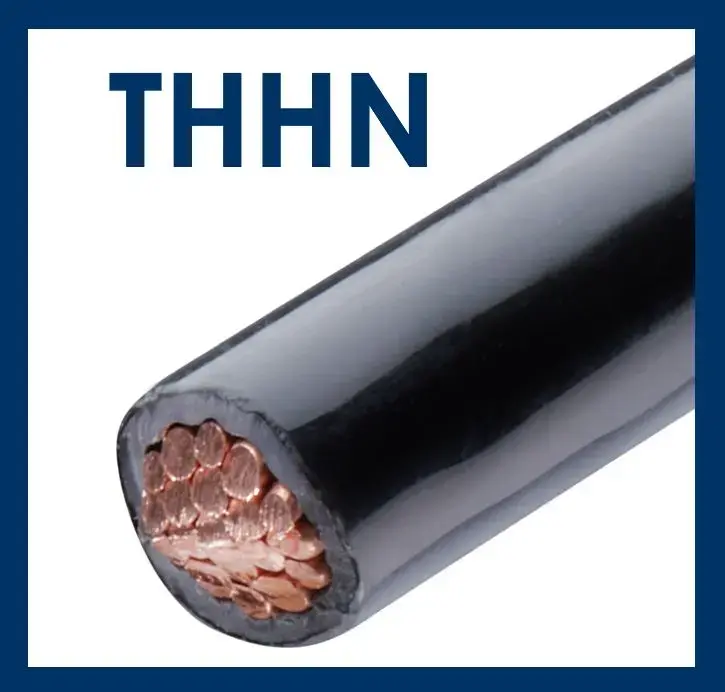
Few products move through an electrical distributor's warehouse with the velocity of THHN. It is the default conductor for branch circuits, the workhorse behind lighting and receptacle loads, and the first line item on countless bid sheets. Yet for all its ubiquity, THHN is frequently misquoted, misunderstood, and mislabeled on purchase orders, leading to costly returns, delayed shipments, and eroded margins.
This guide exists to eliminate that friction. What follows is a comprehensive breakdown of THHN wire specifications, ratings, applications, and the practical logistics that separate a smooth transaction from a frustrating one.
What is THHN Wire?
Decoding the Name: What THHN Actually Means
The THHN designation is not arbitrary. Each letter corresponds to a specific construction characteristic defined by Underwriters Laboratories (UL) and referenced throughout the National Electrical Code (NEC):
Letter | Meaning |
T | Thermoplastic insulation (PVC-based) |
H | Heat-resistant (75°C baseline) |
HH | High heat-resistant (90°C in dry locations) |
N | Nylon jacket over the insulation |
THHN stands for Thermoplastic High Heat-resistant Nylon coated. THHN is available in stranded or solid conductors depending on the size. It is available in copper or aluminum and covered in PVC (polyvinyl chloride) insulation within a nylon jacket. The vast majority of single conductor THHN wire carries a dual rating on the cable marked THHN / THWN for both the wet and dry temperature rating. THHN is UL listed with a rating of 90 degrees Celsius in dry locations or 75 degrees Celsius in wet applications with the THWN designation.
The result is a 600-volt rated, single-conductor building wire with a PVC primary insulation and an outer nylon sheath. That nylon layer is thin, typically 4 mils (0.004 inches), but it punches well above its weight. It provides abrasion resistance, chemical resistance, and a low-friction surface that makes pulling through conduit significantly easier than bare PVC alternatives.
THHN wire has several key distinctions compared to other building wire products. THHN uses a thinner PVC insulation which is a key factor in terms of its wide variety of electrical properties and uses. THHN lacks the flexibility of some other products due to its durable nylon coating. This rigidity can often be a plus many for contractors and end-users as its easy-feeding nature saves time during installation. THHN building wire has really grown in popularity due to it being a cost-effective alternative when compared to other variations of building wire. In most situations, electricians who use THHN building wire find these products to be effective, budget-friendly solutions that meet/exceed project specifications.
The Dual Rating Reality: THHN/THWN-2
Open any box of THHN today and the print legend on the conductor will almost certainly read THHN/THWN-2. This dual rating is not marketing; it reflects the fact that modern manufacturing processes produce a conductor that satisfies two distinct UL standards simultaneously.
Understanding what each rating permits is essential for accurate quoting:
Rating | Temperature (Dry) | Temperature (Wet) | Typical Use Case |
THHN | 90°C (194°F) | Not rated for wet | Dry interior conduit runs, raceways |
THWN | 75°C (167°F) | 75°C (167°F) | Wet locations, but derated |
THWN-2 | 90°C (194°F) | 90°C (194°F) | Wet or dry at full ampacity |
The practical takeaway: a conductor printed THHN/THWN-2 can be installed in wet locations at its full 90°C ampacity. This eliminates the derating headache that older THWN-only products created and simplifies specification for contractors working in mixed environments.
When a distributor's customer asks for "THHN," they are almost always receiving THHN/THWN-2. Knowing this prevents confusion when the job site sees a different print legend than expected.
THHN Size Range and Conductor Construction
THHN is manufactured across a broad spectrum of sizes, from fine-stranded control wire to heavy feeders capable of delivering hundreds of amperes. The conductor construction, solid versus stranded, varies by gauge and has direct implications for flexibility, termination, and code compliance.
AWG/MCM | Conductor Type | Typical Application |
14 AWG | Solid | 15A branch circuits, lighting |
12 AWG | Solid or Stranded | 20A branch circuits, receptacles |
10 AWG | Solid or Stranded | 30A circuits, small appliances |
8 AWG | Stranded | 40–50A circuits, ranges, dryers |
6 AWG | Stranded | 55A circuits, sub-panels |
4 AWG – 2 AWG | Stranded | Feeder circuits, heavy equipment |
1 AWG – 4/0 AWG | Stranded | Service entrance, large feeders |
250 MCM – 1000 MCM | Stranded | Industrial feeders, utility connections |
Solid conductors are generally limited to 10 AWG and smaller per NEC 310.3, though 8 AWG solid exists for specific applications. Stranded construction becomes mandatory as conductor diameter increases; the flexibility is necessary for bending radius compliance and practical installation.
For distributors, the solid/stranded distinction matters at the point of sale. A contractor ordering "10 gauge THHN" may have a preference, and confirming it upfront avoids the return that costs everyone money and time.
Ampacity: The Numbers That Win or Lose Bids
Ampacity, the maximum current a conductor can carry continuously under stated conditions, is governed by NEC Table 310.16. Quoting the wrong ampacity means either oversizing (wasting the customer's money) or undersizing (failing inspection). Neither outcome builds repeat business.
The following table reflects copper THHN/THWN-2 ampacity at 90°C in raceway or cable:
AWG/MCM | Ampacity (90°C) | Common Load Examples |
14 AWG | 25A | Lighting circuits (15A breaker) |
12 AWG | 30A | Receptacle circuits (20A breaker) |
10 AWG | 40A | Electric water heaters, small AC units |
8 AWG | 55A | Ranges, large appliances |
6 AWG | 75A | Sub-panels, EV chargers |
4 AWG | 95A | Service feeders |
3 AWG | 110A | Commercial panels |
2 AWG | 130A | Large commercial feeders |
1 AWG | 145A | Industrial equipment |
1/0 AWG | 170A | Heavy industrial, data centers |
2/0 AWG | 195A | Large service entrance |
3/0 AWG | 225A | Industrial mains |
4/0 AWG | 260A | Utility-scale feeders |
250 MCM | 290A | Industrial distribution |
350 MCM | 350A | Large industrial feeders |
500 MCM | 430A | Major industrial loads |
Note: Ampacity values assume no more than three current-carrying conductors in a raceway with an ambient temperature of 30°C. Adjustment factors per NEC 310.15(B) apply for higher fill or elevated temperatures.
Aluminum THHN is also available and offers a cost-effective alternative for larger feeders where terminations are rated for aluminum. Aluminum ampacity runs approximately 80% of equivalent copper sizes, a trade-off balanced by significantly lower material cost.
The Nylon Advantage: Why the Jacket Matters
THHN's nylon jacket is often described as "slippery," and that casual term understates its practical value. During installation, conductors are pulled through conduit runs that may include multiple bends, long horizontal stretches, and vertical rises. Friction accumulates. On a difficult pull, bare PVC insulation can bind, stretch, or even tear.
The nylon sheath reduces the coefficient of friction dramatically, allowing longer pulls with less force and lowering the risk of insulation damage. For contractors, this translates to faster installation. For the distributor, it means fewer complaints about conductor damage and fewer disputes over whether the product was defective or the installation was rough.
Beyond friction, the nylon provides meaningful protection against:
Oils and Greases: Common in industrial environments where conductors route near machinery.
Gasoline and Hydraulic Fluids: Critical for service stations, automotive facilities, and manufacturing plants.
Chemical Solvents: Resists degradation from many common industrial chemicals.
Abrasion: The additional layer protects the PVC insulation during rough handling and installation.
This chemical and mechanical resilience is why THHN remains popular in industrial applications despite the availability of more exotic insulation systems.
Standard Colors and Stocking Considerations
THHN is manufactured in a spectrum of colors, enabling proper phase identification and circuit tracing. The NEC mandates specific colors for grounding and grounded (neutral) conductors while leaving phase conductors largely to convention.
Color | Typical Use (120/208V or 120/240V Systems) |
Black | Phase A (ungrounded conductor) |
Red | Phase B (ungrounded conductor) |
Blue | Phase C (ungrounded conductor, 208V three-phase) |
White | Neutral (grounded conductor) |
Green | Equipment grounding conductor |
Green/Yellow | Isolated ground |
Orange | Delta high leg (208V stinger) |
Brown, Yellow, Purple | Phase conductors in 277/480V systems |
For distributors, color availability directly impacts fill rate. A customer ordering a complete circuit pull expects all required colors in stock. Running out of white 12 AWG while holding pallets of black creates a partial shipment and a frustrated buyer. Understanding regional conventions and stocking accordingly separates high-service distributors from order-takers.
THHN Applications
Contractors often use THHN wire to power lighting and electrical outlets in buildings. Common residential and commercial applications include appliances, water heaters, and HVAC. The wire’s resistance to oil, water, grease and other chemicals and contaminants also makes it safe and effective for industrial applications. This durability also makes it a good call for exterior lighting and commercial uses. Underground installation is handled by using conduit for protection. The versatility of THHN makes it a great option for almost any application, indoors our outdoors.
Understanding these applications helps distributors anticipate demand and position inventory accordingly.
THHN Applications include:
Residential Construction: Branch circuits for lighting, receptacles, and dedicated appliance circuits. The 14 AWG and 12 AWG solid variants dominate this space, pulled through EMT or NM-B replaced runs during renovations.
Commercial Buildings: Lighting circuits, receptacle runs, and mechanical equipment feeds. Stranded 10 AWG through 4/0 AWG see heavy use for HVAC equipment, elevators, and panel feeders.
Industrial Facilities: Power distribution to machinery, motor circuits, control wiring, and lighting. The chemical resistance of the nylon jacket makes THHN a preferred choice in manufacturing environments.
Data Centers: Feeder circuits to power distribution units (PDUs) and branch circuits within server rows. The high ampacity of larger THHN sizes pairs well with the dense power requirements of modern computing infrastructure.
Renewable Energy: While not rated for direct burial or UV exposure, THHN serves as the conduit wiring between solar inverters and main panels, and from wind turbine bases to grid-tie equipment.
THHN Compared: Alternatives and When to Suggest Them
THHN is not the only single-conductor building wire, and knowing when an alternative better serves the customer builds credibility and captures margin on specialty products.
Product | Key Difference from THHN | When to Recommend |
XHHW-2 | Thermoset (XLPE) insulation, slightly thicker, superior moisture resistance | Wet locations, underground in conduit, long service life requirements |
USE-2 | Rated for direct burial and underground service entrance | Utility-to-meter connections, direct burial without conduit |
MTW | Machine tool wire rating, flexible stranding, oil-resistant | Industrial machinery, control panels, OEM equipment |
RHH/RHW-2 | Rubber insulation, excellent flexibility at low temperatures | Cold environments, applications requiring extreme flexibility |
When a customer's specification calls for XHHW or USE-2, suggesting THHN as a substitute creates liability and erodes trust. Conversely, when the spec is open and THHN meets the requirements, its lower cost and ready availability make it the practical choice.
The Logistics Equation: Cuts, Reels, and Inventory Depth
For the distributor, THHN is as much a logistics product as a technical one. The difference between profit and pain often comes down to three factors.
Cut-to-Length Service: Many jobs require specific footage, not master reels. A 347-foot pull does not benefit from purchasing a 500-foot reel and scrapping the balance. Working with a supplier who cuts to order reduces waste, lowers freight costs, and improves bid competitiveness.
Reel Sizes and Put-Ups: Standard put-ups vary by manufacturer and size. Knowing whether a product ships on 500-foot, 1,000-foot, or 2,500-foot reels affects quoting accuracy and warehouse planning. Large power-sized conductors (8 AWG and up) often ship on wooden reels that require forklift handling.
Power-Sized Inventory: The 8 AWG through 750 MCM range is where many suppliers fall short. These larger sizes move in lower volumes than 12 AWG and 14 AWG, but when a commercial or industrial project needs them, lead time matters. Sourcing from a stocking supplier eliminates the multi-week delays that kill project schedules.
DWC Has Power Sized THHN!
Distributor Wire & Cable stocks THHN across the full size range, from 14 AWG circuit wire through 750 MCM power-sized feeders in copper and aluminum. Our supplier network provides access to the colors, put-ups, and specialty configurations that keep your orders complete rather than backordered.
Cut-to-length orders eliminate scrap and right-size freight costs for jobs that don't need full reels. Custom wire striping is available for circuit-sized THHN, enabling easy circuit identification on multi-circuit pulls without the markup of factory-striped product. fastQuote delivers pricing in approximately six minutes, enabling your sales team to respond to bid requests while the opportunity is still warm.
For larger conductors, note that THHN in 1/0 AWG and above carries a CT (cable tray) rating, expanding installation options for industrial and commercial projects where open tray routing is specified.
Request a quote from your Account Manager at 888-439-2947 or log into your fastQuote account to get moving.
Explore our full Building Wire offering for XHHW, XLP/USE, and other single-conductor solutions.