
The Electrical Distributor's Guide to URD Cable
Written By: Cody Barrett
Posted March 9, 2024
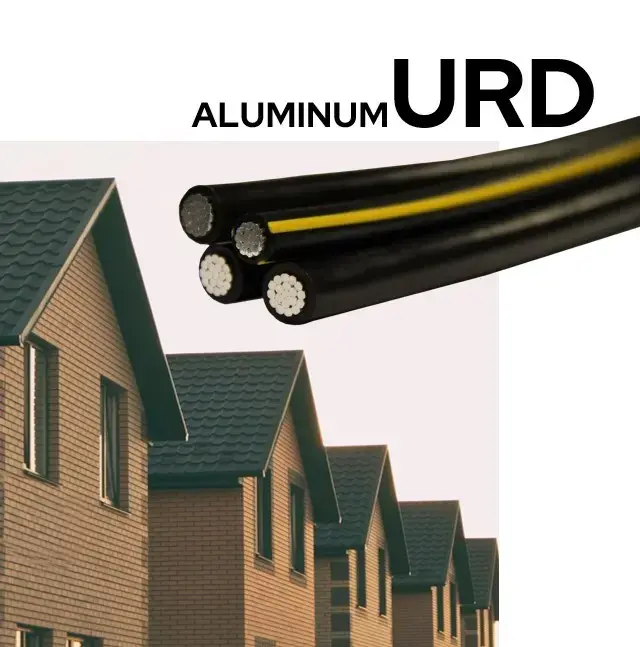
How to Capture a $13 Billion Market Segment with the Right Inventory Strategy
When your contractor calls at 7 AM asking for 500 feet of triplex URD to finish a pad-mount transformer connection, the question isn't whether they need it. The question is whether you can get it to them today or whether they're calling your competitor next.
Underground Residential Distribution cable represents one of the steadiest, most predictable segments in the electrical distribution market. Unlike specialty cable for data centers or renewable projects, which can surge and recede with economic cycles, secondary URD demand tracks directly with housing construction and commercial development. The global URD cable market reached $12.11 billion in 2024 and is projected to grow at 7.41% annually to reach $18.61 billion by 2030. That growth is not speculative. It's tied to housing permits, utility infrastructure investments, and the continued shift toward underground utilities in new construction.
This guide explains what distributors need to know about URD cable beyond the basic product specifications. We'll cover the market forces driving demand, the configuration decisions that determine which product your contractor actually needs, and the inventory strategy that positions you as the go-to source when that 7 AM call comes in.
Understanding the URD Product Category
The term "URD" gets applied broadly in the industry, sometimes creating confusion about what product a contractor actually needs. At its core, URD refers to cables designed for underground installation in residential and light commercial distribution systems. The critical distinction is between secondary URD at 600 volts and primary URD at medium voltage ratings.
Secondary URD Cable: The Core Product
Secondary URD operates at 600 volts and represents the core of distributor URD sales. This is the cable that runs from pad-mounted transformers to residential and commercial service entrances. Every new home, every apartment complex, every strip mall with underground utilities needs secondary URD to complete the electrical service connection.
The product is designed for secondary distribution circuits where installation occurs in duct or direct burial applications. Conductors are aluminum, either traditional 1350 series or the newer AA-8000 series alloy that offers increased flexibility. The cable is insulated with cross-linked polyethylene (XLPE), rated for 90°C maximum operating temperature in wet and dry conditions, and comes in configurations from single conductor to quadruplex depending on the service requirements.
Primary URD: A Different Animal
It's worth understanding where secondary URD fits in the broader underground distribution picture. Primary URD operates at medium voltage levels (15kV to 35kV) and serves utility distribution applications, running from substations through underground systems to feed pad-mounted transformers. Primary URD features aluminum conductors with concentric neutral construction and is primarily a utility-specification product.
For distributors, the key distinction is this: secondary URD at 600 volts is contractor-driven business tied to residential and commercial construction. Your contractors pull it to complete service connections. Primary URD is utility-driven business with different specification requirements, longer lead times, and project-based ordering patterns. This guide focuses on secondary URD because that's where most distributor opportunity lies and where DWC maintains deep inventory positions.
URD Cable Configuration Guide
Selecting the right URD configuration depends entirely on the service type and load requirements. Understanding these distinctions helps you ask the right qualification questions and recommend the correct product the first time.
Configuration | Construction | Application | Typical Service |
Single Conductor | One insulated conductor | High-ampacity feeders, custom phase configurations | Large commercial, industrial feeders |
Duplex | One phase + one neutral twisted together | Street lighting, small single-phase loads | 120V services, outdoor lighting |
Triplex | Two phases + one neutral twisted together | Single-phase 120/240V residential services | Single-family homes, small commercial |
Quadruplex | Three phases + one neutral twisted together | Three-phase commercial and industrial services | Apartments, commercial buildings, small industrial |
Key Qualification Questions
When a contractor calls for URD, the configuration conversation takes about 30 seconds when you know what to ask.
Service Type: Single-phase residential service almost always means triplex. Three-phase commercial means quadruplex. Street lighting and small loads typically call for duplex. Large feeders may require single conductor runs that allow custom sizing for each leg.
Ampacity Requirement: Standard residential services typically need 200A capacity, pointing toward sizes like 4/0-4/0-2/0 or 2-2-4 triplex depending on the specific ampacity tables and installation conditions. Higher loads push toward larger conductors.
Installation Method: Direct burial installations allow higher ampacity ratings than duct installations due to better heat dissipation. The same cable might be rated 215A in direct burial but only 175A when installed in conduit. Knowing the installation method helps match the right size to the load.
Conductor Material: The 1350 aluminum alloy has been the industry standard for decades and represents the majority of URD installations. The 8000 series alloy offers improved mechanical properties and is increasingly specified by utilities and in the 2023 NEC.
If your contractor mentions 8000 series
specifically, they likely have it called out on the job specs.Market Drivers: Why URD Demand Keeps Growing
Three major forces are driving sustained URD demand through 2030 and beyond: new construction, grid hardening investments, and the regulatory push toward underground infrastructure. Understanding these drivers helps distributors anticipate demand and stock accordingly.
Housing Construction: The Steady Foundation
The United States authorized approximately 1.48 million new housing units in 2024, and the Congressional Budget Office projects housing starts to average 1.68 million annually from 2025 to 2029. Every one of those homes needs electrical service, and the vast majority of new residential developments now specify underground utilities. The aesthetic and reliability advantages of underground distribution have made it the default expectation for new construction rather than the premium option.
Single-family housing starts increased 6.5% in 2024 despite elevated mortgage rates, and the National Association of Home Builders expects continued gains in 2025 driven by persistent housing shortages. For distributors, this translates to predictable, recurring URD demand that tracks with building permits in your service area.
Grid Resilience: The Infrastructure Tailwind
The Infrastructure Investment and Jobs Act allocated $65 billion for grid resilience, and a substantial portion of that funding is flowing into underground infrastructure. While much of this investment targets utility-grade primary distribution systems, the downstream effect benefits secondary URD demand as well. New underground residential developments require secondary URD for every service connection, and utilities increasingly mandate underground service in areas where overhead lines have proven vulnerable.
Florida Power & Light's Storm Secure Underground Program exemplifies this trend. FPL's underground lines performed five to fourteen times better than overhead lines during the 2024 hurricane season. As utilities expand underground infrastructure in storm-prone regions, new residential and commercial developments in those areas default to underground service connections. For distributors, this translates to sustained secondary URD demand in markets where utilities are actively expanding underground distribution.
Wildfire Mitigation: Driving Underground Development Standards
California's Senate Bill 884 established a framework for expedited undergrounding of utility lines in high fire-threat districts, and Pacific Gas & Electric has committed to undergrounding 10,000 miles of distribution lines over ten years. While this utility-scale work involves primary distribution cable, the policy shift has broader implications. As utilities convert to underground distribution in fire-prone areas, new construction in those regions follows suit with underground service requirements.
The practical effect for distributors is that underground service connections become the non-negotiable standard in expanding geographic areas. Contractors working in regions with aggressive undergrounding programs increasingly specify underground service even when not strictly required, because it aligns with the direction utilities are moving. This regulatory momentum sustains secondary URD demand growth independent of housing cycle fluctuations.
URD Specification Essentials for Distributors
Beyond configuration and size, several specification details matter when qualifying URD orders and verifying that you're stocking the right products.
Conductor Alloy: 1350 vs. 8000 Series
The 1350 aluminum alloy has served the electrical industry for decades and remains the workhorse for URD applications. It provides excellent electrical conductivity and adequate mechanical properties for underground installation.
DWC stocks 1350 series URD
across configurations for standard residential and commercial service applications.The AA-8000 series aluminum alloys offer improved creep resistance and flexibility compared to traditional 1350 alloy. These enhanced mechanical properties make 8000 series conductors more resistant to loosening at termination points over time and easier to work with in tight installation conditions. DWC's 8000 series URD features compact/compressed Class B stranded conductors per ASTM B-800 and B-801, rated Type USE-2 per UL 854. As an option, 8000 series cable can be provided pre-pulled into duct for projects where that simplifies installation logistics.
The practical impact for distributors is that some specifications now specifically call out 8000 series material, particularly where increased flexibility is needed or where the contractor prefers the improved termination stability. When a contractor asks for "8000 series URD," they need the same triplex or quadruplex configuration with AA-8000 alloy rather than 1350. Both options are rated for 600 volts, 90°C maximum operating temperature in wet and dry locations, and suitable for duct installation or direct burial.
Insulation and Temperature Rating
Cross-linked polyethylene (XLPE or XLP) insulation is standard for secondary URD cable, providing the moisture resistance, dielectric strength, and mechanical durability required for underground installation. The cross-linking process creates molecular bonds that improve the polyethylene's temperature resistance and long-term stability compared to conventional thermoplastic insulation.
DWC's URD cable carries a 90°C maximum operating temperature rating suitable for both wet and dry locations. Phase conductors feature black XLPE insulation, while neutral conductors use black XLPE with three extruded yellow stripes for clear identification during installation and termination. The cable is rated Type USE-2, indicating its suitability for underground service entrance applications in direct burial or duct installations.
Neutral Identification
DWC's URD cable uses three extruded yellow stripes on the neutral conductor for clear identification. These stripes are integral to the black XLPE insulation and remain visible throughout the cable's service life, making it easy for installation crews to identify the neutral during termination. This marking standard applies across both 1350 and 8000 series product lines.
Common URD Sizes and Applications
The following sizes represent the core of most distributors' URD inventory, covering the majority of residential and light commercial service requirements.
Size | Configuration | Approx. Ampacity (Direct Burial) | Typical Application |
4-4-4 | Triplex | 123A | 100A residential service |
2-2-4 | Triplex | 160A | 150A residential service |
1/0-1/0-2 | Triplex | 215A | 200A residential service |
4/0-4/0-2/0 | Triplex | 290A | Heavy 200A+ residential, small commercial |
4-4-4-4 | Quadruplex | 119A | Small 3-phase commercial |
2/0-2/0-2/0-1 | Quadruplex | 245A | Medium 3-phase commercial |
Inventory Strategy: Capturing URD Business
URD cable presents a straightforward inventory decision for most distributors. The product category has standardized specifications, predictable demand patterns, and consistent turnover rates. The challenge isn't selecting what to stock. The challenge is maintaining availability when contractors need it.
The Availability Advantage
When a contractor needs URD to complete a service installation, they need it within hours, not days. The underground work is already done. The transformer is set. The homeowner is waiting to pass final inspection. In this scenario, the distributor who has triplex in stock wins the order regardless of minor price differences.
This reality shapes the URD market in favor of distributors who maintain consistent stock positions. Rather than winning orders through aggressive pricing, you win them through availability. The contractor who knows you always have 1/0-1/0-2 triplex in stock stops calling around for quotes. They just call you because they know they can get the cable today.
Stock Depth Decisions
Core residential sizes deserve the deepest stock positions because they generate the most consistent turnover. The 4-4-4, 2-2-4, and 1/0-1/0-2 triplex configurations cover the vast majority of residential service requirements. These are products that should essentially never be out of stock.
Larger triplex sizes like 4/0-4/0-2/0 and quadruplex configurations typically move in lower volume but serve important market segments. A working stock position on these sizes captures commercial project business without requiring the inventory depth of residential staples.
The decision to stock both 1350 and 8000 series depends on your market. If your contractors frequently encounter specs calling for 8000 series alloy, maintaining parallel inventory in popular sizes prevents lost orders. If 8000 series requests are rare in your territory, stocking 1350 series and sourcing 8000 series as needed may be more efficient.
Why Distributors Source URD Through DWC
At Distributor Wire & Cable, we understand that URD business lives and dies on availability. Our model is built around maintaining the stock depth that allows you to say "yes" to contractor requests without hesitation.
Both 1350 and 8000 Series in Stock: We carry URD in both traditional 1350 series aluminum and AA-8000 series alloy across triplex and quadruplex configurations. Whether your contractor needs standard 1350 for a typical residential service or 8000 series where increased flexibility and improved termination stability are specified, we have both options ready to ship.
Pre-Pulled Duct Option: For projects where installation efficiency matters, our 8000 series URD can be provided pre-pulled into duct. This option eliminates pulling labor on site and ensures the cable arrives ready for direct installation into the trench.
No Cut Charges: URD orders frequently come in odd lengths. A 347-foot run doesn't round up neatly. Unlike manufacturers who charge cutting fees, we cut to your specification at no additional charge. Your contractor gets exactly what they need, and you don't have to explain cutting upcharges.
Same-Day Shipping: Orders placed by early afternoon ship the same day from our U.S. distribution network. When your contractor calls at 7 AM needing triplex, you can confirm shipping before they finish their coffee.
No Minimum Orders: A single-reel order receives the same attention and turnaround as a project with twenty reels. We're here to support your business at whatever volume makes sense for each opportunity.
fastQuote Access: Our fastQuote platform provides instant pricing and availability on URD and our complete product line. When you need a quick answer for your contractor, you can verify stock and pricing without waiting for callbacks.
Positioning for Sustained URD Demand
The fundamentals driving URD demand aren't going away. Housing construction continues. Utilities keep investing in underground infrastructure. Regulators continue pushing for grid resilience. For distributors, this creates a sustained opportunity in a product category that rewards consistent availability over pricing games.
The contractors installing underground services in your market have to buy URD somewhere. They'll buy it from the distributor who can get it to them today. Make sure that distributor is you.
Contact your DWC Account Manager for current URD pricing and availability, or access fastQuote for instant quotes on your next order. Call 888.439.2947 or visit distributorwire.com.