
How to Identify Tray Cables and Power Limited Tray Cables: A Guide for Distributor Success
Written By: Craig Keller
Posted March 12, 2026

The warehouse manager stood frozen, staring at three nearly identical spools of cable. The emergency order called for 500 feet of PLTC for a security system upgrade, needed by noon. One spool's faded label showed "TC," another had "PLTC" barely visible under warehouse dust, and the third's marking had worn completely off. Making the wrong choice meant either losing a $15,000 sale or shipping the wrong product and eating the return costs.
This scenario plays out daily in electrical distribution. Tray cables and power limited tray cables look frustratingly similar—both might have gray PVC jackets, both come in similar conductor configurations, both live in the same warehouse aisle. Yet shipping TC when the contractor needs PLTC could shut down an installation, while sending PLTC for a power application creates safety hazards and code violations. The ability to quickly and accurately identify these cables transforms warehouse chaos into operational excellence.
Here's where DWC's systematic approach to cable identification pays dividends. With over 15,000 distributor partners served and shipping accuracy at 99.68%, we've learned that proper identification starts with clear labeling and extends through every touchpoint—from receiving dock to delivery truck. That same discipline extends to our fastQuote portal, where specifications and drawings can be reviewed early to help prevent costly mix-ups that damage relationships and margins.
Reading the Tray Cable Jacket: Your First Line of Defense
The cable jacket tells the story if you know how to read it. Manufacturers must print specific information on cable jackets per UL requirements, and understanding this code prevents most identification errors. Start with the basics: "TC" indicates Type TC tray cable rated for 600V (or higher) power applications. "PLTC" designates Power Limited Tray Cable, restricted to 300V and power-limited circuits. This fundamental distinction—TC for power, PLTC for control and signaling—drives everything else.
But jackets carry more information than just type designation. Look for the voltage rating immediately after the type. TC cables typically show "600V," though some display "600V/1kV" for dual-rated versions. PLTC uniformly shows "300V" unless it's a specialized version. This voltage marking provides the quickest verification when jacket printing has partially worn away—if you see 600V, it's not PLTC regardless of what other markings suggest.
Temperature ratings appear next, and here's where identification gets interesting. TC cables commonly show "90°C Wet or Dry" for XLP versions or "75°C" for PVC insulation. PLTC might display "75°C" or "105°C" depending on construction and intended application. That 105°C rating on a 300V cable immediately identifies it as PLTC designed for industrial control circuits near heat sources—valuable information when contractors need specific temperature performance.
The conductor information reveals another identification layer. TC cables list conductor size and count: "3/C 12 AWG" means three-conductor, 12-gauge. PLTC often includes more detail: "10/C 18 AWG Shielded" indicates ten conductors, 18-gauge, with shielding. The presence of shielding information strongly suggests PLTC, as power circuits rarely require shields while control and instrumentation circuits commonly do.
Visual and Physical Differences: What Your Warehouse Team Needs to Know
Beyond jacket printing, physical characteristics help identify cable types quickly. TC cables, designed for power transmission, typically feature thicker, more robust construction. The jacket feels substantial, designed to withstand the mechanical stress of carrying significant current. PLTC, optimized for signal integrity rather than power delivery, often has a thinner, more flexible jacket that's easier to route through complex control cabinet configurations.
Conductor count provides another visual clue. TC cables commonly come in 2 to 5 conductor configurations—matching typical power circuit requirements. Finding a cable with 7, 12, or 20 conductors almost certainly indicates PLTC for control applications. When your warehouse team sees high conductor counts, they should immediately verify they're handling control rather than power cable.
Color coding tells its own story. TC power cables typically follow standard power wiring colors: black, red, blue for phases, white or gray for neutral, green for ground. PLTC might use entirely different schemes: numbered conductors, color-pair combinations for instrumentation, or custom configurations for specific control schemes. A cable with black/white twisted pairs numbered 1 through 10 screams PLTC for instrumentation, not TC for power.
The presence of shielding—visible as a foil wrap or braid when you strip back the jacket—strongly indicates PLTC. Power circuits rarely need electromagnetic interference protection, while control and instrumentation circuits commonly require shielding to maintain signal integrity. If your team sees shields, especially individually shielded pairs, they're almost certainly handling PLTC.
Weight per foot provides a quick verification method. TC cables with larger conductors for power transmission weigh significantly more than PLTC with smaller gauge control wiring. Your experienced warehouse staff develop an intuitive sense—if a 100-foot coil feels surprisingly light, double-check whether it's PLTC rather than the TC on the pick ticket.
The Tray Cable Voltage Test: Understanding the 300V/600V Divide
The voltage rating distinction between PLTC (300V) and TC (600V or higher) isn't arbitrary—it reflects fundamental differences in application and safety requirements. This voltage divide helps prevent dangerous misapplications while enabling cost-effective solutions for appropriate circuits. Understanding why this matters helps your team explain cable selection to contractors who might not grasp the implications.
PLTC's 300V limitation matches the NEC definition of power-limited circuits—those inherently limited in power output to reduce fire and shock hazards. Building automation, security systems, instrumentation, and control circuits operate well within this voltage constraint. The lower voltage rating allows manufacturers to optimize insulation thickness for flexibility and smaller diameter rather than voltage withstand, benefits that matter in crowded control cabinets.
TC's 600V rating handles industrial power distribution—480V three-phase systems with margin for transients and surges. Some applications push toward 575V or even 690V, making 600V the practical minimum for power cables. The insulation thickness required for this voltage rating creates a more robust cable that coincidentally provides better mechanical protection for power conductors carrying significant current.
The dual-rated confusion deserves attention. Some PLTC cables carry dual ratings like "PLTC/ITC" (Instrumentation Tray Cable) or "PLTC/CL3P" (Class 3 Plenum). These remain 300V cables with additional listings for specific applications. Don't confuse this with TC cables rated 600V/1kV—those are power cables with extended voltage range, completely different from any PLTC variation.
When contractors specify by voltage alone—"I need 300V tray cable"—your team must probe deeper. Are they powering equipment (unlikely at 300V) or controlling it? The voltage rating alone doesn't tell the whole story, but it's often the first clue that someone's specifying the wrong cable type for their application.
Tray Cable Shielding Configurations: The Control Cable Giveaway
Shielding configuration often provides the clearest identification between TC and PLTC, yet many distributor personnel don't understand what they're seeing. That aluminum foil or copper braid isn't decoration—it's electromagnetic protection that reveals the cable's intended purpose. Power cables rarely need shielding because magnetic fields from current flow are expected and managed through proper spacing. Control cables require shielding to maintain signal integrity in electrically noisy environments.
The overall shield—foil or braid wrapped around all conductors under the jacket—indicates basic PLTC for general control applications. This configuration protects against external interference while treating all internal conductors as a single circuit group. When you peel back a jacket and see aluminum foil with a drain wire, you're almost certainly handling PLTC, not TC.
Individually shielded pairs take identification a step further. Each twisted pair wrapped in its own foil shield with individual drain wires screams instrumentation-grade PLTC. These cables handle analog signals—4-20mA loops, thermocouple circuits, RTD connections—where crosstalk between pairs would compromise measurement accuracy. No TC power cable uses individually shielded pairs; it's exclusively a PLTC feature.
The combination shield—individual pairs plus overall shield—represents premium PLTC for critical control applications. This belt-and-suspenders approach provides maximum noise immunity for sensitive circuits. If your warehouse team encounters this configuration, they're handling specialized PLTC that probably costs significantly more than standard versions. Shipping TC by mistake wouldn't just fail functionally; it might represent a huge cost difference.
Drain wire configuration provides quick identification too. PLTC shields require drain wires for proper grounding—thin, bare copper conductors making contact with the shield. TC cables might have ground conductors, but they're insulated or bare conductors sized for equipment grounding, not tiny drain wires for shield termination. Multiple drain wires almost guarantee PLTC with individual pair shields.
Tray Cable Conductor Size and Stranding: Power Versus Precision
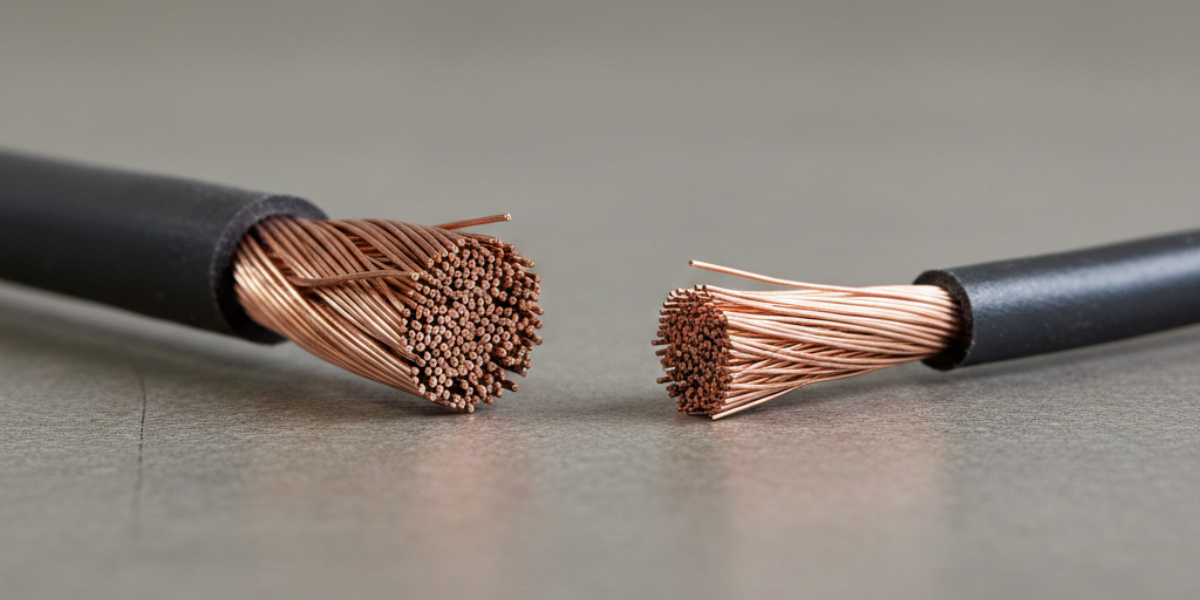
Conductor characteristics immediately separate TC from PLTC once you strip back insulation. TC power cables use larger conductors—typically 14 AWG and bigger—to handle significant current. PLTC control cables optimize for signal transmission with smaller conductors—18 to 22 AWG commonly—that would overheat carrying power loads. This size difference is visible and tactile; power conductors feel substantial while control conductors seem delicate.
Stranding configuration tells another story. TC cables often use Class B stranding—relatively few, larger strands creating a conductor that's flexible enough for installation but stable for termination. PLTC might use Class K stranding—many fine strands creating exceptional flexibility for routing through control cabinets and moving equipment. The difference is obvious when handling: PLTC conductors feel almost silky while TC conductors feel comparatively stiff.
The conductor count mathematics rarely overlap. TC cables max out around 5 conductors for three-phase-plus-neutral-plus-ground configurations. Finding 7, 9, 12, or more conductors almost guarantees PLTC for complex control schemes. When a pick ticket calls for "37-conductor cable," your warehouse team shouldn't waste time checking if it's TC—that conductor count means PLTC for multi-point control applications.
Twisted pair configuration provides another identifier. PLTC for instrumentation often features twisted pairs—two conductors spiraled together to reduce electromagnetic interference. TC power cables don't use twisted pairs; the conductors lay parallel or cabled together without specific pairing. If you see black/white twisted pairs numbered sequentially, you're handling PLTC for instrumentation or control.
Application Context: The Ultimate Verification For Tray Cable
Sometimes the best identification method involves understanding where the cable's going. A purchase order for a food processing plant control system upgrade? That's PLTC territory. An order for a new 200HP motor feeder? Definitely TC. Training your team to recognize application patterns prevents errors when physical identification proves challenging.
Building automation systems exclusively use PLTC. HVAC controls, lighting management, access control, security systems—all operate on power-limited circuits requiring PLTC's 300V rating and smaller conductors. When contractors mention "BAS" or "BMS" (Building Management System), your team should immediately think PLTC, not TC.
Variable frequency drive (VFD) applications split between types. The power connection from panel to drive requires TC—it's carrying full motor current at 480V or higher. But the control wiring—start/stop signals, speed references, feedback sensors—uses PLTC. VFD projects often require both cable types, making it critical to identify which connection the contractor's discussing.
Fire alarm systems present special considerations. While they're control circuits suggesting PLTC, fire alarm circuits might require specific cable types—FPLP (Fire Power Limited Plenum) or similar—that aren't standard PLTC. When contractors mention fire alarm systems, verify whether they need actual PLTC or specialized fire alarm cable that happens to be power-limited.
Industrial control panels showcase the distinction perfectly. The feeder bringing power to the panel requires TC rated for the supply voltage and current. Inside the panel and extending to field devices, PLTC handles control signals, pilot lights, pushbuttons, and sensors. One panel might need both cable types, making accurate identification essential for complete project supply.
DWC's account managers help distributors understand these application patterns in their specific markets. Our experience across 15,000+ distributor partners reveals regional and industry variations—knowledge we share to help you identify and stock appropriately for your customer base.
TC Code Requirements: When NEC Articles Guide Identification
Understanding relevant NEC articles helps verify cable identification when physical characteristics prove ambiguous. Article 336 covers Type TC Power and Control Tray Cable, explicitly for power applications. Article 725 addresses Class 2 and Class 3 Remote-Control, Signaling, and Power-Limited Circuits, where PLTC typically applies. Knowing which article applies helps confirm you're handling the right cable type.
The wiring method restrictions reveal cable type too. TC cable requires cable tray, raceway, or messenger support in most applications—it can't run loose above suspended ceilings or through walls like some control cables. PLTC enjoys more installation flexibility in some jurisdictions, though it still requires proper support. If a contractor's describing an installation method that wouldn't work for TC, they probably need PLTC.
Hazardous location requirements differ between types. Both TC and PLTC can serve Class I Division 2 areas, but installation requirements vary. TC might need specific sealing and fitting types for power circuits, while PLTC for instrumentation might have different requirements. When orders reference Division 2 locations, verify whether power or control circuits are involved—it affects which cable type applies.
The plenum rating question helps identify purpose. Plenum-rated versions exist for both TC and PLTC, but PLTC-plenum combinations are far more common. Control circuits routinely run through air-handling spaces above suspended ceilings. Power circuits typically use conduit protection in plenum spaces rather than plenum-rated cable. If someone's asking for plenum-rated tray cable, they probably need PLTC.
Labeling Systems: Creating Foolproof Identification For Tray Cable
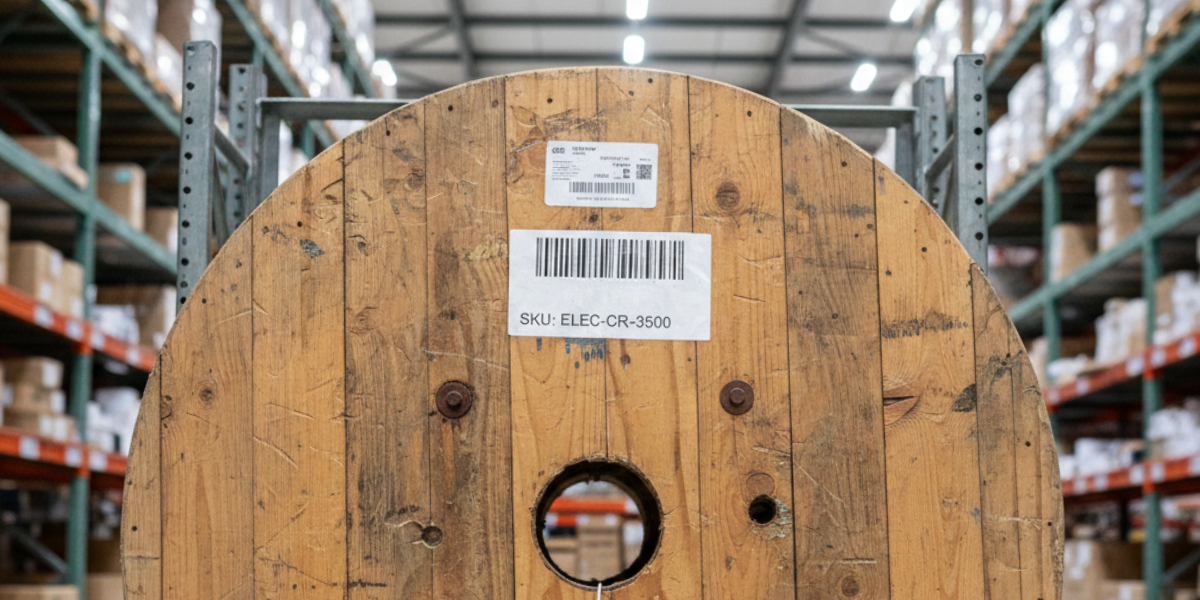
The best identification strategy prevents confusion before it starts. Implementing systematic labeling throughout your warehouse eliminates guesswork and prevents costly shipping errors. Start with receiving—verify and label every incoming spool before it enters inventory. Don't trust manufacturer labels alone; add your own classification system that your team understands.
Color-coded rack labels create visual separation. Use red tags for TC power cables, blue for PLTC control cables. The color distinction is visible from across the warehouse, preventing pick errors before they happen. Train new employees that red means power, blue means control—simple enough to remember under pressure.
Location strategy reinforces identification. Don't mix TC and PLTC in the same rack section. Create dedicated control cable aisles separate from power cable storage. Physical separation prevents grabbing the wrong spool when rushing to fill emergency orders. The extra warehouse space required pays for itself by preventing just one significant shipping error.
Implement verification checkpoints throughout the fulfillment process. Require pickers to confirm cable type against the pick ticket—not just size and length. Add a verification step at shipping where someone double-checks TC versus PLTC before loading. These redundant checks catch errors when individual identification fails.
DWC's approach to labeling and identification shows in our 99.68% shipping accuracy. Every spool in our six distribution centers carries multiple identification points—manufacturer markings, our internal labels, and systematic location assignment. When you order PLTC through fastQuote, you receive PLTC, not TC that looked similar in someone's quick glance.
Training Your Team on Tray Cable: From Confusion to Confidence
Effective identification requires consistent training across your entire team—sales, warehouse, delivery, even accounting needs to understand the distinction. Create simple reference materials showing side-by-side comparisons. Include actual cable samples staff can touch and examine. Physical interaction builds recognition faster than photos or descriptions.
Develop identification challenges that make learning engaging. Place unmarked cable samples in the break room with a prize for correctly identifying each type. Run monthly contests where warehouse staff compete to identify cables fastest. Making identification skills visible and valued improves performance while building team capabilities.
Include identification scenarios in onboarding training. Don't just explain the difference; simulate real situations. "A contractor calls asking for tray cable for his BAS upgrade. Which type do they need?" "You're pulling cable marked 3/C 18 AWG Shielded. Is this TC or PLTC?" Scenario training builds decision-making skills beyond rote memorization.
Cross-train between departments to build comprehensive understanding. Let warehouse staff shadow sales calls to understand how contractors describe requirements. Have salespeople spend time in the warehouse seeing how easily cables can be confused. Shared experience builds empathy and improves communication when identification questions arise.
Document identification errors and share lessons learned. When someone ships TC instead of PLTC, don't just fix the mistake—understand how it happened and adjust procedures. Maybe jacket printing was worn, suggesting better storage practices. Perhaps the pick ticket was ambiguous, indicating order entry improvements. Every error teaches prevention strategies.
The Tray Cable Technology Advantage: Digital Tools for Accurate Identification
Modern technology streamlines cable identification beyond visual inspection. Barcode systems eliminate reliance on faded jacket printing. Scan the spool, verify the screen shows the right type, proceed with confidence. The investment in scanning equipment pays for itself by preventing shipping errors that destroy margin and relationships.
Digital resources on the DWC website provide comprehensive specification sheets for both TC and PLTC. By utilizing the fastQuote portal to access past quotes and orders, your team can maintain a digital paper trail of exactly which specifications were used for previous successful projects, building an internal knowledge base of reliable product matches.
Inventory management systems should separate TC and PLTC completely—different item numbers, categories, and locations. Never use generic "tray cable" descriptions that obscure type differences. Clear digital separation prevents order entry errors that cascade through fulfillment. Your system should make ordering the wrong type difficult, not easy.
QR codes on rack labels can link to identification guides. Warehouse staff scanning a location immediately see photos, specifications, and application notes for that cable type. Instant access to information builds confidence and prevents errors when experienced staff aren't available for questions.
Common Misidentification Scenarios and Solutions
The "it's all tray cable" mistake kills profitability through returns and damaged relationships. Yes, both TC and PLTC install in cable trays, but that's where similarity ends. Train everyone that "tray cable" isn't specific enough—always verify TC versus PLTC before proceeding with quotes or picks.
The voltage assumption creates expensive problems. "It's only 24V control power, so regular TC is fine, right?" Wrong. Control circuits require PLTC regardless of voltage. Conversely, "It's 277V lighting, so PLTC works?" No—that's power requiring TC despite being under 300V. Voltage alone doesn't determine cable type; application does.
The shield confusion generates specification errors. "The print shows shielded cable, so it must be PLTC." Usually true, but shielded TC exists for variable frequency drives and other applications. Verify conductor size and voltage rating, not just shield presence. Similarly, unshielded PLTC exists for basic control circuits. Don't assume shields equal PLTC or their absence indicates TC.
The conductor count trap catches experienced personnel. "It's 4-conductor, so it must be TC for three-phase power." Not necessarily—4-conductor PLTC exists for control circuits. Verify conductor size and application, not just count. The reverse happens too: assuming high conductor counts mean PLTC when specialized TC configurations exist.
Tray Cables: Your Profitability Depends on Proper Identification
Every misidentified cable costs money—return freight, restocking labor, expedited replacement shipping, and damaged customer relationships. A distributor shipping $500 of TC instead of PLTC might lose $200 in direct costs plus immeasurable reputation damage. Conversely, proper identification builds trust, prevents callbacks, and positions you as the reliable source contractors need.
DWC's systematic approach to cable identification protects your profitability. Our clear labeling, comprehensive inventory separation, and fastQuote review process prevent the confusion that creates costly errors. When you partner with DWC, you're leveraging our 99.68% accuracy rate and expertise from serving 15,000+ distributors—experience that translates into fewer errors and better margins for your business.
The investment in identification excellence—training, labeling, systems, verification—returns multiples through prevented errors and improved efficiency. Your warehouse team works faster when identification is clear. Sales quotes more accurately when cable types are certain. Customers trust distributors who consistently deliver the right product.
Essential Identification Takeaways
TC indicates 600V power cable while PLTC designates 300V control cable—this fundamental distinction drives everything
Physical characteristics including conductor size, shield presence, and weight provide quick identification
Jacket markings tell the complete story when properly interpreted—voltage, temperature, conductor details
Application context often clarifies type—building automation means PLTC, motor feeders require TC
Systematic labeling and warehouse organization prevent errors before they occur
Technology tools from barcodes to digital catalogs enhance identification accuracy
Training across all departments builds organizational capability for accurate identification
Common misidentification patterns are preventable through awareness and verification procedures
The distributor who masters tray cable identification eliminates a major source of errors, returns, and customer frustration. Every correct identification builds confidence—in your warehouse team pulling orders, your sales team providing quotes, and your customers receiving exactly what their projects require.
Ready to eliminate cable identification confusion? Partner with DWC for clearly labeled, accurately shipped tray cables backed by our industry-leading 99.68% accuracy rate. Our fastQuote system and experienced account managers help ensure you're ordering, stocking, and delivering the right cable type every time. Because in electrical distribution, shipping the right product isn't just good service, it's the foundation of profitable growth.